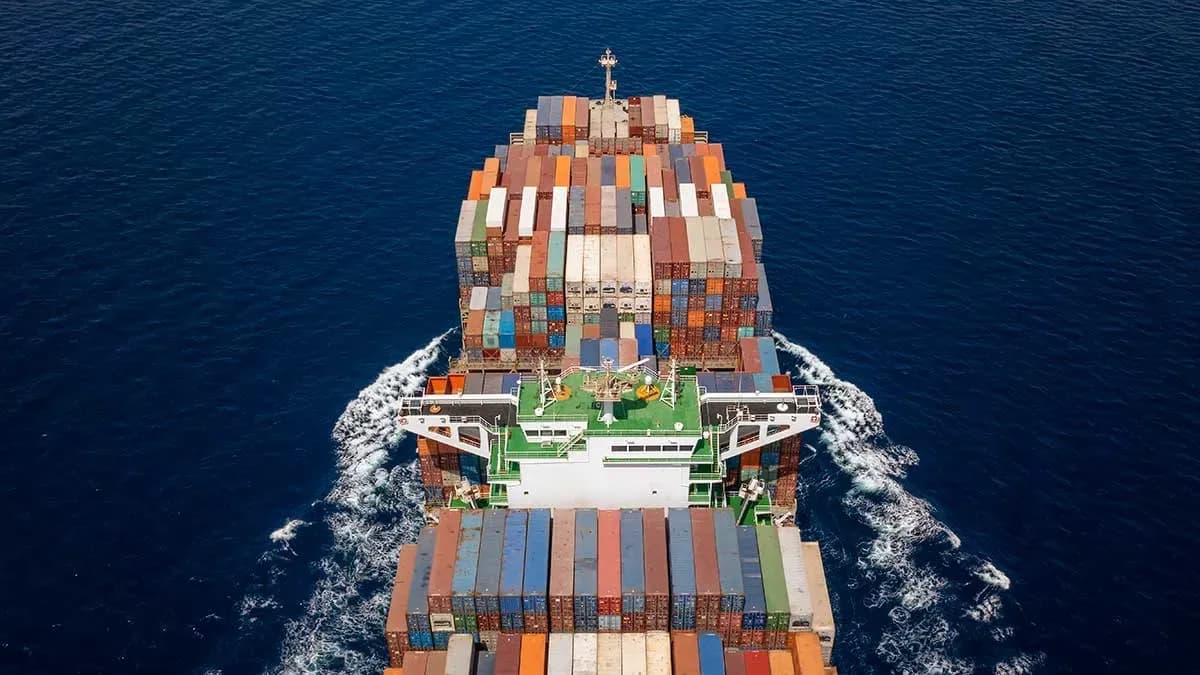
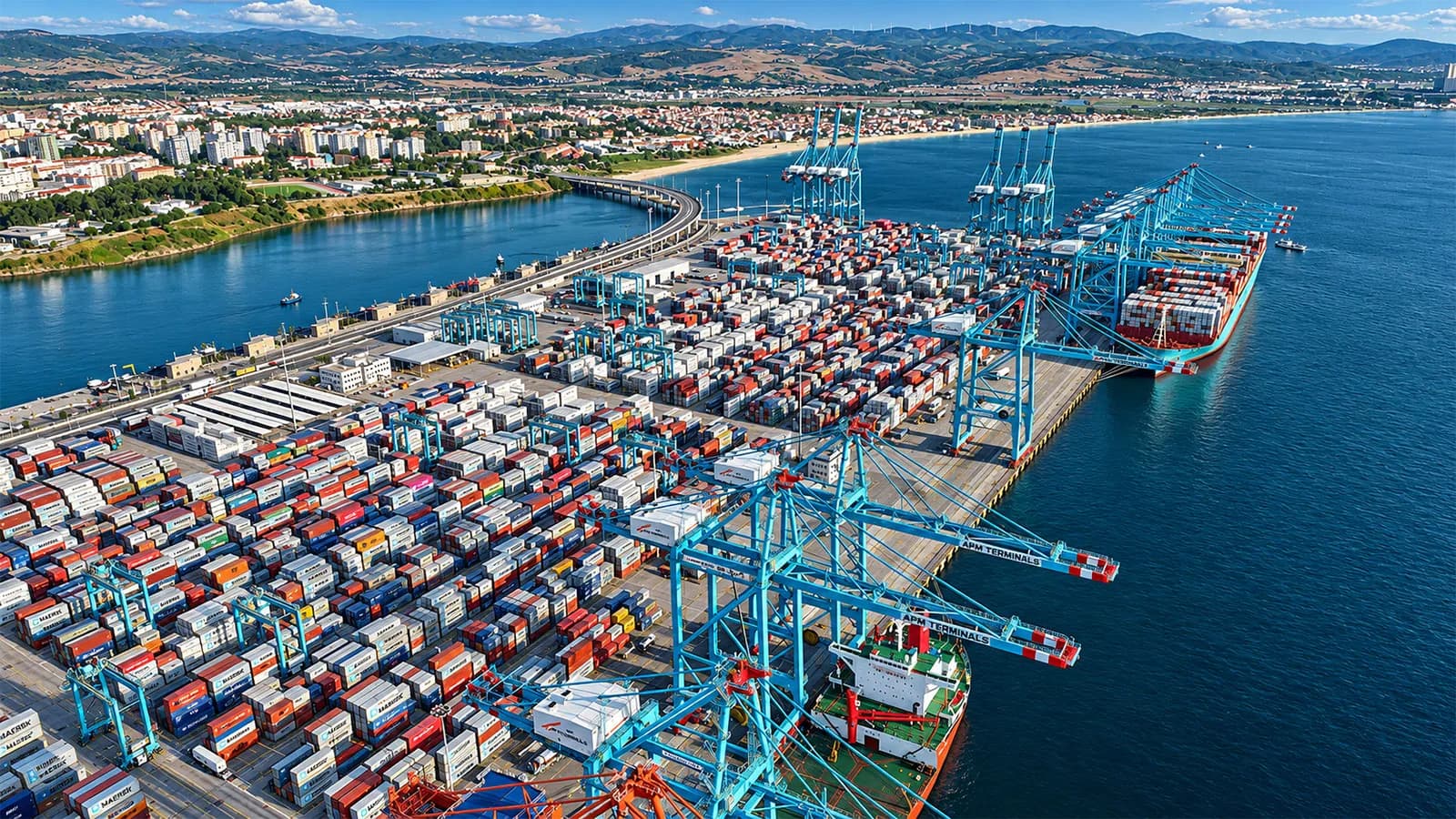
The association European Shipowners | ECSA has presented an updated study on the economic value of European maritime transport in the European Parliament, which positions the fleet controlled by shipowners from the continent as a first-order geopolitical asset for energy, food, and the supply chain security of the European Union. The report, internally prepared by ECSA with data from Clarksons Research and Eurostat, reveals that the European fleet represents 34.5% of the world's gross tonnage as a five-year moving average, although its share has decreased from the 38.5% recorded in 2018 to 32.8% in 2025 due to the faster growth of other regions, especially Asia-Pacific.
The fleet controlled by European shipping companies reached a total capacity of 570.5 million GT (gross tonnage) in December 2025, distributed across 22,403 ships. Since 2018, capacity has increased by approximately 11%, and the year-on-year growth of 2.6% recorded in 2025 was the highest during the analyzed eight-year period. However, during the same interval, the global fleet expanded by around 30%, largely driven by the Asia-Pacific region, whose share rose from 40.8% to 45.1%, a gain mainly attributed to the expansion of the Chinese fleet. The Americas, on the other hand, saw their participation reduced from 8.4% to 6.3%.
In economic terms, the impact of European maritime transport was estimated at 148.7 billion euros in 2023, compared to 127.8 billion in 2021. The total turnover of the sector reached 241.4 billion euros, a considerable increase compared to the 186.7 billion in 2021. The direct added value generated by the shipping industry in the EU-27 and Norway amounted to 69.5 billion euros in 2023, a figure that remained stable compared to 69.3 billion in 2022 and contrasts with pre-pandemic levels, which ranged between 27,000 and 34,000 million euros. Direct employment in the sector stood at about 233,500 people in 2023, while total associated employment, including indirect and induced effects, reached 1.68 million jobs worldwide.
The study underscores that the European economy is one of the most open and oriented towards international trade in the world. The ratio of foreign trade to the GDP of the EU is 65% higher than that of the United States and 14% higher than that of China. In this context, maritime transport channels approximately 76% of the EU's foreign trade, making the fleet a central piece of European competitiveness.
The diversification of the European fleet is another of the elements that the report highlights. European shipowners control 45% of the world's containership capacity, 34% of tankers, 32% of LNG gas carriers, 28% of bulk carriers, 28% of vehicle carriers, 52% of ferries, and 37% of dredgers. This presence spans segments that are crucial for the continent's energy security: 87% of the EU's gas imports and 89% of oil imports are transported by sea. In the realm of critical raw materials, European bulk carriers — 166.9 million GT distributed across 3,875 ships — transport steel for offshore wind turbine foundations and the rare earth elements needed for the energy transition. 88% of European cereal exports leave the EU by sea, and 82% of coffee and tea imports depend on maritime transport.
The European fleet operates on a global scale, and its reach goes far beyond European waters. According to Clarksons Research data, approximately 21% of the gross tonnage of all merchant ships operating in Asia is controlled by European shipowners. In strategic segments, that share is even greater: European containerships represent 34% of the active capacity in Asia, while bulk carriers reach 20%.
The business structure of the sector reflects a remarkable diversity. Of the more than 4,000 shipping companies based in the EU-27 and Norway, 90% control fewer than ten ships, and only 0.5% have fleets of over 100 ships. This coexistence between small and medium-sized enterprises and a small number of large shipping groups supports the resilience and flexibility of the sector.
In terms of energy transition, the report identifies European shipowners as the world's leading investors in vessels powered by sustainable fuels. Europe holds 44% of the global order book for vessels ready for low and zero carbon fuels (LZCF), measured by tonnage. Within the European order book, 54% of the gross tonnage corresponds to vessels designed to operate with sustainable fuels, compared to 45% in the Asia-Pacific order book.
However, this investment push is not matched by the availability of fuels on the continent. Asia-Pacific concentrates 74% of the global production projects for sustainable fuels, while Europe barely accounts for 10%, North America for 9%, and the rest of the world for 7.5%. Furthermore, less than 5% of the anticipated European production of sustainable fuels — estimated at 3.6 Mtoe (million tons of oil equivalent) — is currently destined for maritime use, highlighting intense competition with other sectors for a limited supply. Internal analyses by ECSA suggest that, in a high-demand scenario, the LZCF fuel needs of European maritime transport could exceed the projected domestic supply in Europe by 2035.
The imbalance between investment in ships and fuel production raises energy security issues, as European shipowners are commissioning vessels that will require sustainable fuels on a large scale while the production capacity is predominantly being developed outside of Europe. The study notes that the maritime sector contributes approximately 9 billion euros annually to the revenue of the European emissions trading system (EU ETS) once the system is fully implemented. ECSA argues that the reinvestment of these funds into the production and availability of clean fuels for maritime transport in Europe is essential both for the energy transition of the sector and for the energy security of the continent.
Sotiris Raptis, Secretary General of European Shipowners | ECSA, remarked: "The European fleet is growing steadily, but other fleets are growing faster. This shows the fierce competition that European maritime transport faces. To remain globally competitive, we need equitable competitive conditions on an international scale. Once a global regulatory framework is agreed upon at the IMO, it will be necessary to withdraw existing regional measures." Raptis added that as long as maritime transport is subject to EU climate legislation, "it is essential to invest the 9 billion euros that shipping companies contribute to the EU ETS in supporting the production and availability of clean fuels for maritime transport in Europe," and warned that fuel production in Europe "is losing ground to Asia, with only 10% of sustainable fuels available on the continent."
The report, which updates periodic studies published by ECSA since 2014 with the analysis of CE Delft, primarily uses data from Clarksons Research for the fleet and statistics from Eurostat and the EU Blue Economy Report 2025 for the economic indicators. The fleet data covers until 2025, while the economic indicators correspond to 2023, the last full year with available data at the start of the study.