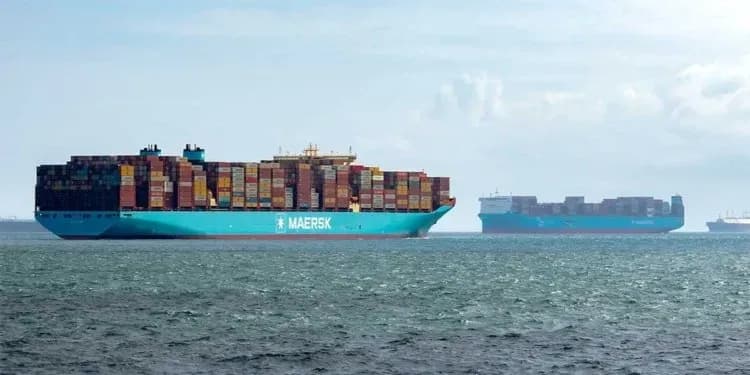
The Danish shipping company, Maersk, is closely monitoring the evolution of the situation in the Middle East and issued an update on the impact that this context has on shipments and its services in the area. In light of the developments, the company noted that it is taking preventive measures to protect its personnel, ensure safety, safeguard the integrity of the cargo, and maintain the stability of its logistics network.
In the maritime sector, the company indicated that it is implementing operational actions to ensure the protection of its personnel and goods, as well as to sustain the continuity of service on the affected routes. After a recent risk assessment and an operational review, Maersk decided to suspend with immediate effect the acceptance of refrigerated, hazardous, and special cargo to and from the United Arab Emirates, Oman, Iraq, Kuwait, Qatar, Bahrain, and Saudi Arabia until further notice. Additionally, it announced the immediate suspension of all new bookings between the Indian subcontinent — India, Pakistan, Bangladesh, and Sri Lanka — and the Gulf markets, which include the United Arab Emirates, Bahrain, Qatar, Iraq, Kuwait, and Saudi Arabia, specifically at the ports of Dammam and Jubail. The company clarified that this measure does not affect other trade corridors.
The impact on seaports and ocean operations could also extend delivery times, especially for shipments that combine maritime and air transport through affected logistics centers. Likewise, disruptions could occur in land movements within airports and cargo terminals, including the delivery, acceptance, and processing of goods, particularly in places where there are local restrictions or staff shortages.
Regarding land services, Maersk stated that truck, rail, and storage transport continue to operate in the region. However, it warned that customers may face congestion at borders, delays in customs processes, and variations in transit times. The adoption of alternative routes and strengthened security measures could lead to adjustments in schedules and costs. The company assured that it maintains constant monitoring of the situation to respond quickly and manage operations efficiently.
Confirmed bookings made before this notice will be evaluated on a case-by-case basis, taking into account current operational limitations. Cargo already in transit remains under active management, and the company's teams will continue to monitor movements and directly contact customers if additional adjustments are necessary. Finally, the shipping company recommended that its customers contact their local representative to explore alternative routes, different entry options, or land solutions outside the affected areas, as long as it is operationally viable, reiterating that their priority is the safety and resilience of their operations.