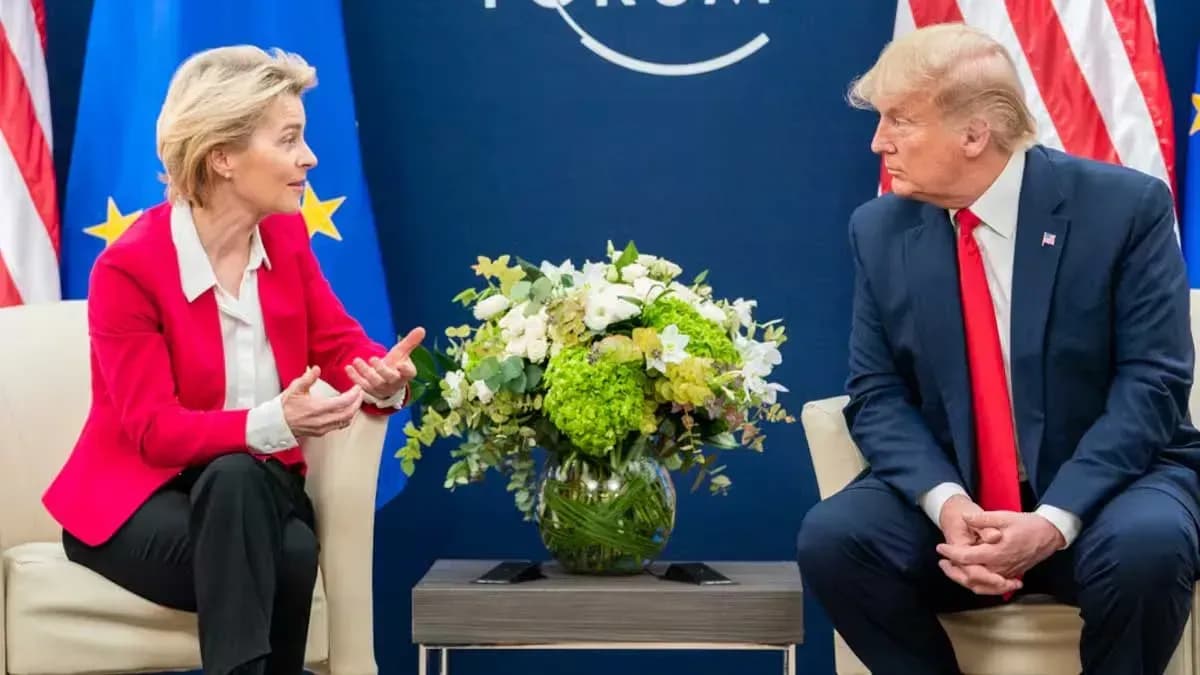
The European Union has asked for clarity from the United States on how its Administration will proceed after the recent ruling from the U.S. Supreme Court which declared ultra vires —that is, beyond its executive powers— the tariffs imposed by President Trump under the International Emergency Economic Powers Act (IEEPA), in response to various threats classified as "emergencies."
Following the court ruling, Trump reacted harshly against the high court, calling the justices who voted against him "a disgrace" and accusing them of undermining presidential authority. At the same time, he emphasized that the ruling does not invalidate all existing tariffs and that those applied for national security reasons and those established under Article 301 "remain fully in effect."
In response, the president signed an executive order within hours under Section 122 of the United States Trade Act of 1974, through which he introduced a universal tariff of 10% on all his trade partners, effective from February 24. Hours later, in a message posted on Truth Social, Trump announced the increase of that rate to 15%, the maximum allowed by law, effective immediately. Section 122 grants the president the authority to maintain this measure for no more than 150 days, unless Congress approves an extension.
The decree includes a series of exemptions for certain products, taking into account the needs of the U.S. economy. Certain critical minerals, energy products, natural resources, and fertilizers that cannot be produced in sufficient quantities in the domestic market are exempt from the new tariff. Certain selected agricultural products are also exempt —among them beef, tomatoes, and oranges— as well as medications and pharmaceutical ingredients, certain electronic products, vehicles and automotive components, aerospace products, informational materials, donations, and accompanied luggage.