Maersk has completed in Houston the first commercial operation of ship-to-ship supply of 100% ethanol to an oceangoing container ship in the United States. The fuel, produced from US corn, has been supplied by POET as part of the program with which the Danish shipping company analyzes the incorporation of different fuels into its dual-fuel engine fleet.
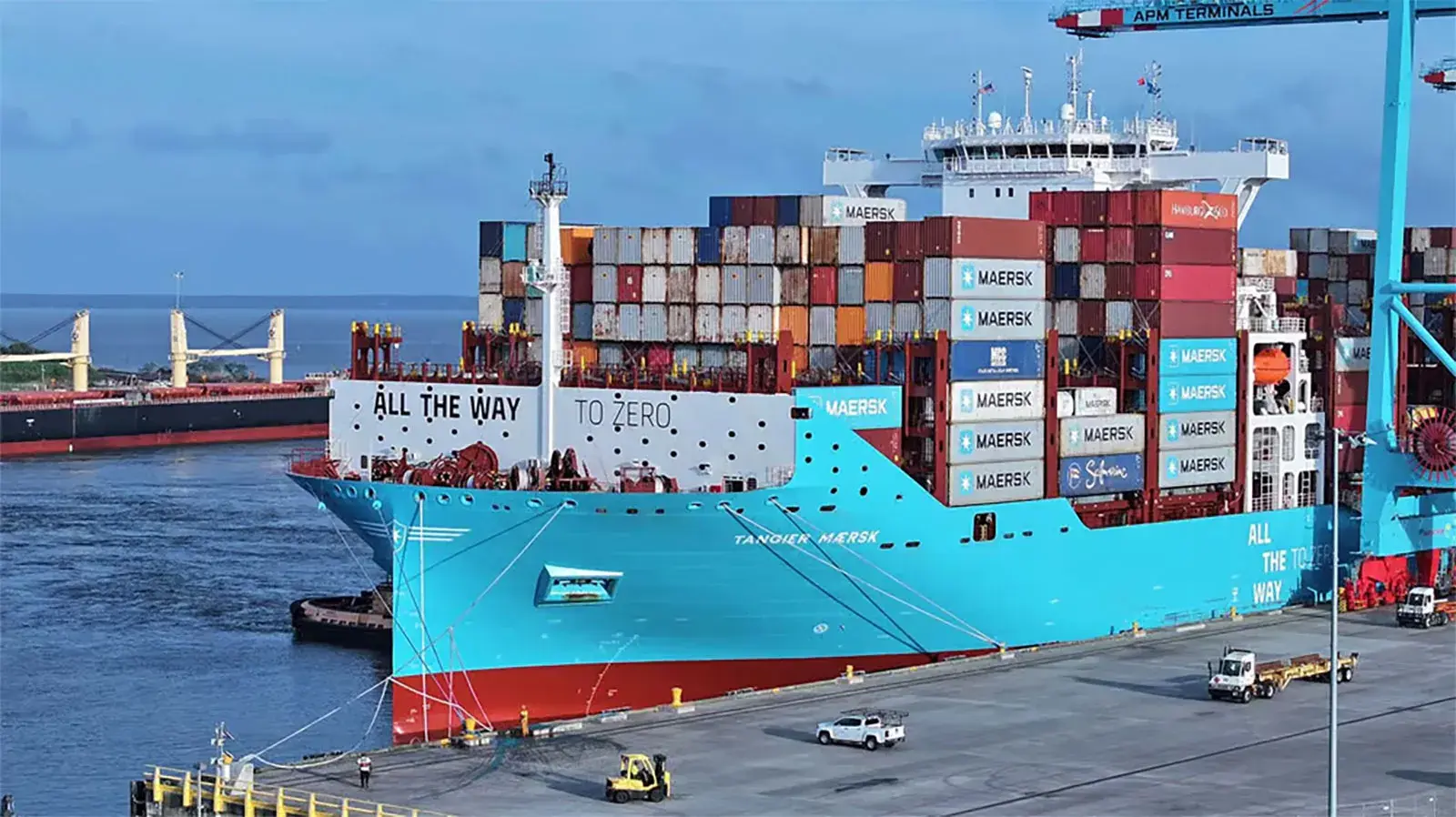
The supply has been made to the Tangier Maersk, a 9,000 TEU container ship incorporated this year into the company's fleet and equipped with a dual-fuel propulsion system ready to use methanol. The trial is supported by the existing similarities between methanol and ethanol, both alcohols, which allows studying the use of the latter in systems initially designed for the use of methanol as an alternative fuel.
The operation has involved the participation of various US companies and agencies. POET has supplied the bioethanol from plant sources, while Kirby Corporation has been responsible for the transportation of the fuel and support for the maritime supply operation. The Port of Houston has provided port coordination and the necessary infrastructure, and the US Coast Guard has intervened in the regulatory requirements associated with the procedure.
For Maersk, the test allows obtaining information under commercial conditions regarding aspects related to fuel operations, supply infrastructures, sourcing, and logistics chain organization. The company considers that the development of this alternative will also depend on factors such as product availability, the regulatory framework, and the readiness of various agents in the maritime chain.
“Bioethanol has the potential to contribute meaningfully to the future energy mix for shipping,” said Emma Mazhari, Vice President of Energy Markets at Maersk. According to the company's official, bioethanol may constitute another low-emission fuel option capable of achieving a larger scale and providing more flexibility to the maritime industry in the process of reducing its carbon footprint.
POET, based in South Dakota, produces over 3 billion gallons of bioethanol per year through a network of 35 bioprocessing facilities. The company believes that existing production in the United States, along with the storage, transportation, and distribution networks already developed for this fuel, can facilitate its entry into the maritime market.
The United States is the world's largest producer of ethanol, followed by Brazil, and both countries account for around 80% of global production. The availability of a developed industry is one of the elements that Maersk is analyzing when studying this alternative for its fleet, along with the technical compatibility with vessels prepared to consume alcohol-based fuels.
Jeff Broin, founder and CEO of POET, has linked the Houston operation with the possibility of connecting US agricultural production with the demand for maritime transport fuels. The company believes that the trial allows transporting bioethanol from a market historically linked to land transport towards larger-scale maritime applications.
The trial with the Tangier Maersk is part of a program previously initiated by Maersk on board the Laura Maersk. During a first phase conducted in 2025, the shipping company used a mixture consisting of 10% ethanol and 90% e-methanol to check its integration into the fuel system and analyze aspects such as ignition, combustion, lubricity, corrosion, and emissions.
After that first test, Maersk subsequently raised the ethanol proportion to a mixture of 50% with methanol and continued its trials with higher concentrations. The program has also included operations with the Antonia Maersk, within the analysis that the company conducts on the possibility of using different alcohols in its dual-fuel fleet.
The Tangier Maersk belongs to a new series of medium-sized container ships ordered by Maersk with a nominal capacity of about 9,000 TEU and dual-fuel systems prepared for methanol. Its incorporation expands the number of vessels in the shipping company capable of operating with alternative fuels in addition to conventional marine fuels.
The company maintains a strategy based on studying different energy solutions instead of relying on a single fuel. Besides methanol and ethanol, Maersk is working with other options to reduce emissions from its maritime operations. In the case of bioethanol, the tests developed so far seek to determine its technical behavior on board and the necessary conditions to have supply chains capable of meeting its potential commercial use in different ports.