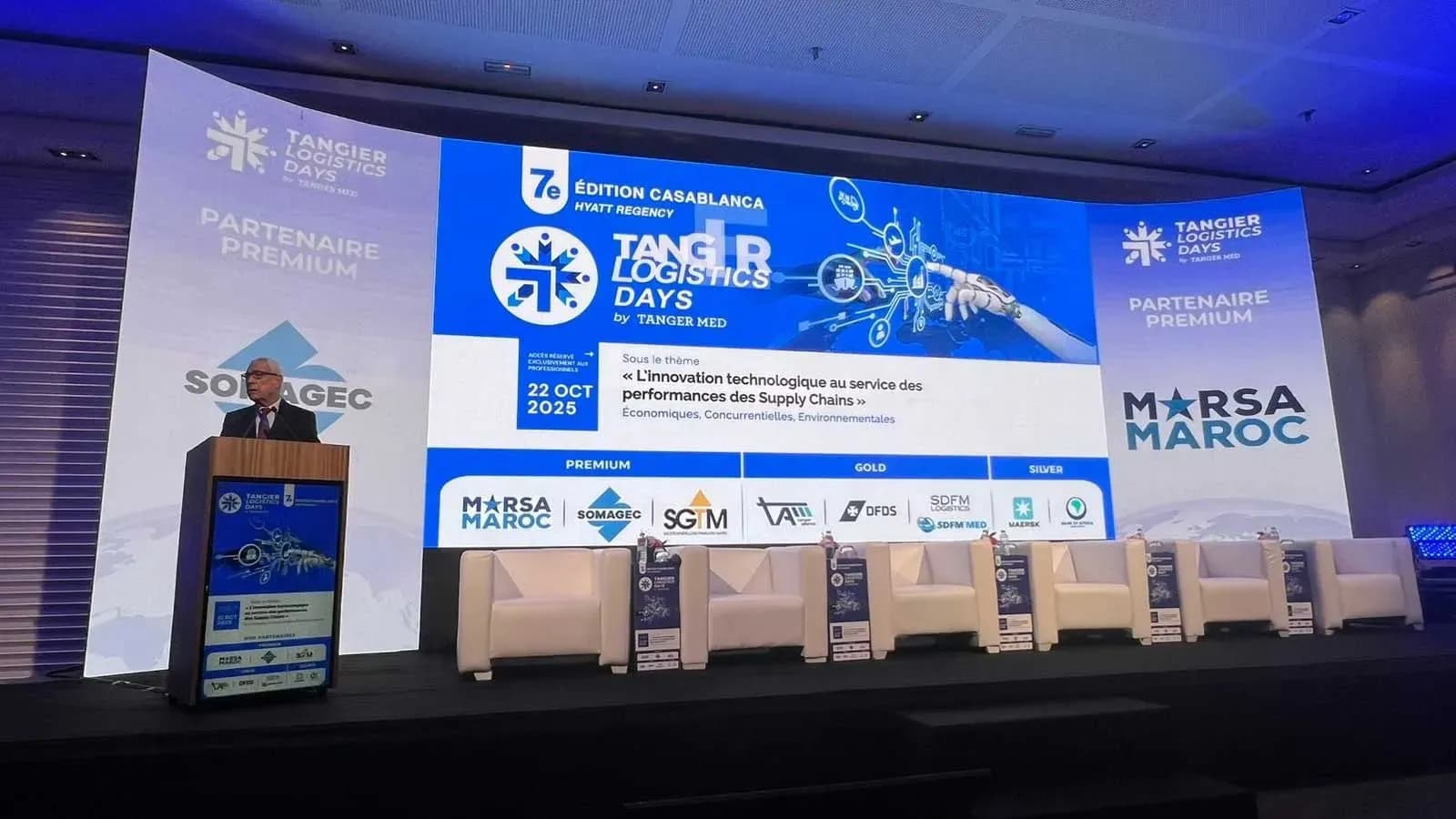
The eighth edition of the Tangier Logistics Days, organized by Tangier Med, will take place next Friday, September 25, 2026, at the Tangier Med Port Center in Tangier. The event, which has consolidated itself as the reference logistics meeting of the region as everyone returns to work in the fall, will bring together executives, international experts, decision-makers, and key players in transportation, logistics, and the supply chain to analyze the significant transformations affecting the sector.
Conceived from its origins as an immersive and prospective experience, the forum aims to improve the understanding of the current and future challenges of the supply chain, as well as to share best practices and innovations that can help address them. Over its seven previous editions, the Tangier Logistics Days have successively tackled the major axes of transformation in the sector: the latest cycle began with an analysis of geopolitical challenges — which remain a central concern for supply chain leaders — and continued last year with the role of technological innovations in improving logistics performance.
The 2026 edition opens a new cycle under the slogan 'Augmented supply chain: the human being and data, scarce and strategic resources.' The focus shifts to what the organizers describe as a new door to open: the symbiosis between human capital and the power of data in an environment marked by uncertainty, the rise of artificial intelligence, and the growing challenges of digital sovereignty.
In this context, the competitiveness of exporting and importing companies increasingly depends on their ability to attract, train, and mobilize skilled talent, while they must also be able to master, protect, and value their strategic data. Both dimensions — the human and the technological — cease to be the exclusive responsibility of logistics departments and require increasingly close interaction between supply chain directors and human resource and information systems management. The day aims to explore this convergence and its practical implications for organizations.