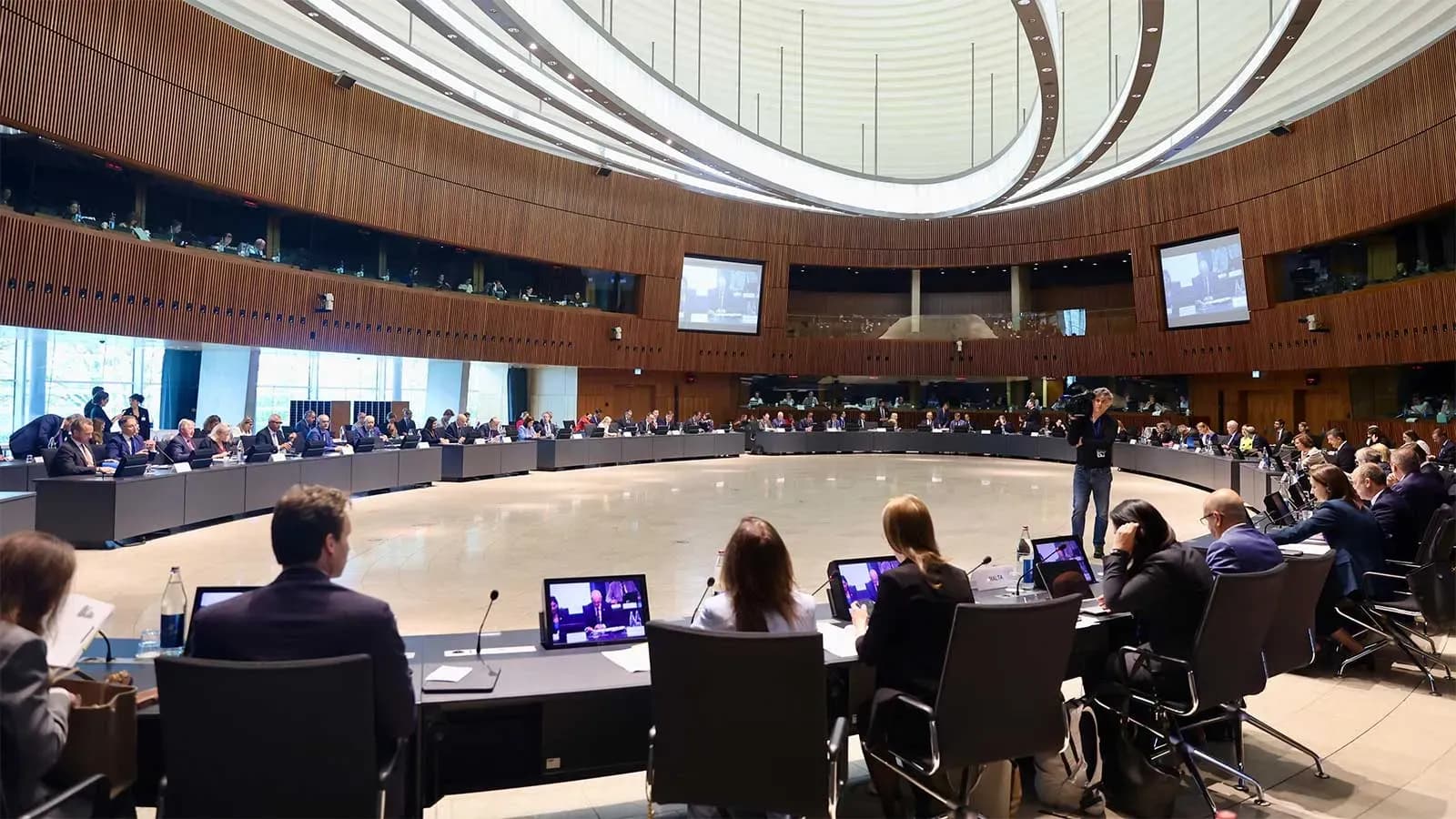
The European Sea Ports Organization (ESPO) has positively valued the Council's conclusions on the future European Ports Strategy, adopted by the transport ministers of the European Union during the Transport Council held on June 8. The entity believes that the document provides a solid foundation for future discussions on the strategy and associated initiatives, as it captures a broad vision of the needs, challenges, and strategic functions of European ports.
ESPO has pointed out that the conclusions stem from an adequate understanding of the role of ports in Europe, the diversity of their ecosystems, and the different governance models existing in member states. The organization considers it particularly relevant that the Council has placed competitiveness at the center of the debate, both in relation to reducing administrative burdens and addressing the differences in conditions compared to neighboring ports located outside the European Union.
The Secretary General of ESPO, Isabelle Ryckbost, has conveyed the organization's recognition of the work carried out by the Cypriot Presidency in drafting the conclusions on port and maritime strategies. Ryckbost has indicated that the member states seem to clearly support the need to focus European action on competitiveness, through a reduced administrative burden and a response to the unequal conditions faced by European ports compared to non-community enclaves.
ESPO has reminded that 23% of global port calls occur in European ports, a share that, according to the organization, should not be taken for granted or underestimated. The entity links these calls to traffic, terminal investments, business activity, economic growth, and resilience for Europe. In this regard, it considers that the future strategy must take into account the weight of ports in logistics chains, strategic autonomy, and the industrial competitiveness of the continent.
One of the points that ESPO has received with greater satisfaction is the Council's reference to a proportionate and efficient application of the regulation, as well as the need to avoid unnecessary administrative and financial burdens, in line with the principles of regulatory improvement. The organization supports the request addressed to the European Commission and to the member states to identify and implement simplification measures. In its view, the sector needs a stable, flexible, and facilitating political environment, with a priority focus on simplification, practical application, and compliance with the regulatory framework developed in recent years, instead of new rules and conditions.
The organization has also valued the Council's support for the adaptation of the General Block Exemption Regulation, known as GBER, regarding the scope, thresholds, and aid intensity percentages applicable to port grants exempted by blocks. ESPO considers it necessary for these parameters to better reflect the real investment costs, adjusted for inflation. Moreover, the entity appreciates the recognition of the importance of funding for basic port infrastructures with high public added value, as well as the need to maintain an attractive environment for investment in European ports and to avoid obstacles for reliable investors.
Another relevant element for ESPO is the Council's call to ensure that future European Union initiatives do not affect national competences regarding port governance, concessions, and land use planning in ports. The organization considers that these matters are part of the essential competences of the member states and must respect the diversity of existing models in Europe.
In environmental matters, ESPO has valued that the Council recognizes concerns related to the impact of the European emission trading system, EU ETS, on the competitiveness of community ports. The organization refers, in particular, to the risk of diversion of traffic, carbon leakage, and relocation of investments, especially in transshipment activities. The Council has invited the European Commission to intensify the monitoring of these effects and to propose specific corrective measures.
For ESPO, the upcoming review of the EU ETS must rigorously address the negative effects that the current maritime system is generating on European ports. The organization holds that only a review proposal capable of mitigating the unintended consequences of the system will allow for a return to balanced competitive conditions for European ports and short-distance maritime transport. ESPO has already submitted its proposals to the European Commission and maintains its willingness to engage in dialogue during the preparation of the future review. Additionally, the entity has valued the Council's attention to the need for a global agreement within the International Maritime Organization and the adaptation of European legislation to avoid double financial payments and additional administrative burdens.
Regarding foreign investments in European ports, ESPO has welcomed the Council's call to apply existing frameworks, avoid duplications, and ensure legal certainty while protecting economic security. The organization considers it essential that the existing horizontal instruments, including the recently revised Foreign Investment Control Regulation, are applied effectively. It also warns that any future guidelines or initiatives should not add an additional layer of complexity, criteria, or conditions applicable only to ports and not to other critical infrastructures.
ESPO has also valued the recognition of the role of ports in alternative fuels and their supply chains. The organization situates this function in areas such as security, good governance, defining appropriate conditions for the safe handling of these fuels in port areas, and attracting investments linked to actual demand. The Council notes the role of the market in the development of clean fuel supply chains in the ports and welcomes new measures aimed at incentivizing the demand for sustainable fuels to enhance their availability, scalability, and affordability.
The organization considers it necessary for ports to receive support in their broader role as energy nodes, both for their contribution to the decarbonization of maritime transport and for their function in energy transition and supply security for the European economy. ESPO has also pointed out that many of these elements are reflected in the Council's conclusions on the European Union's Maritime Industrial Strategy, thus considering it important to maintain coherence between both frameworks.