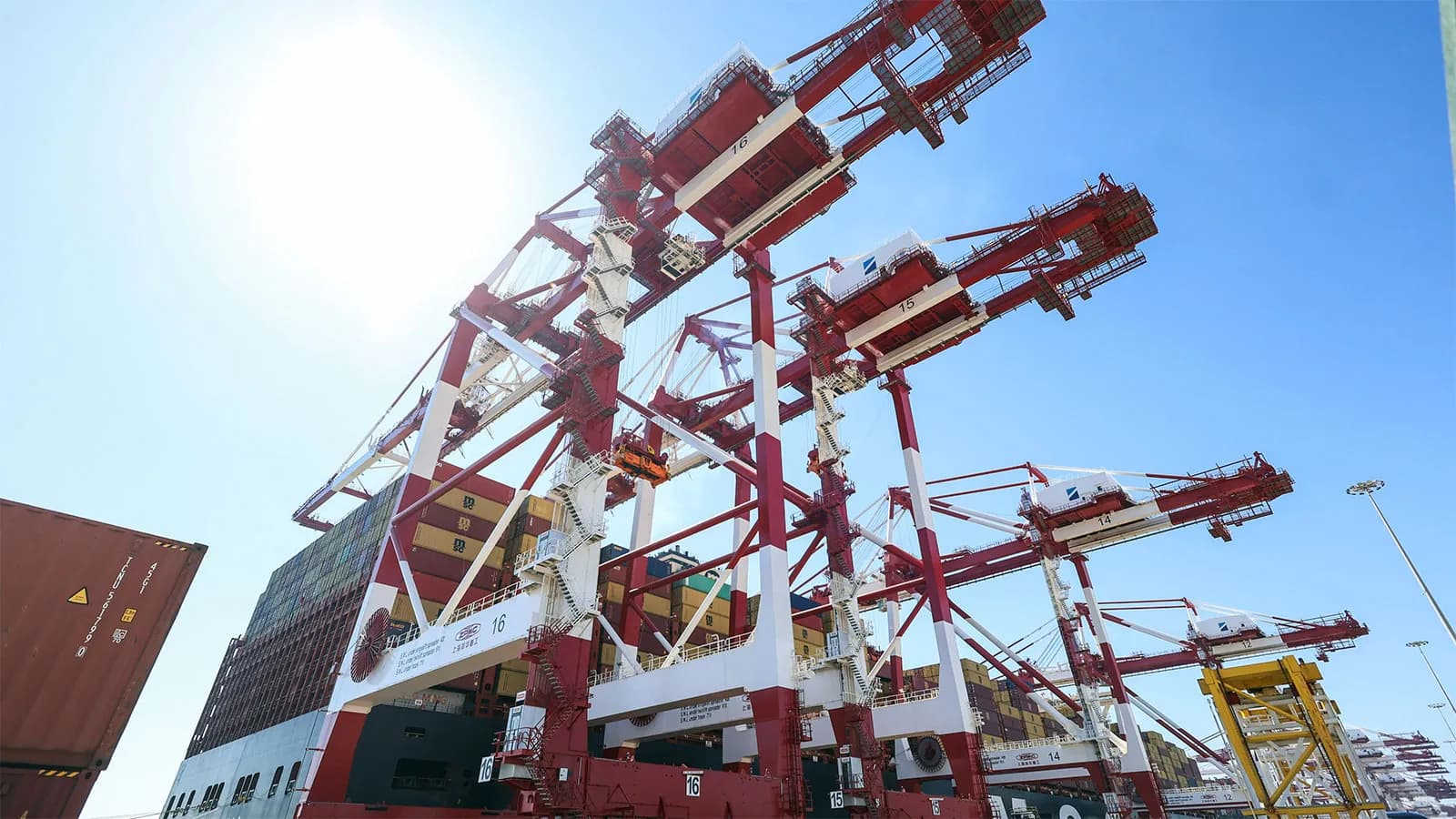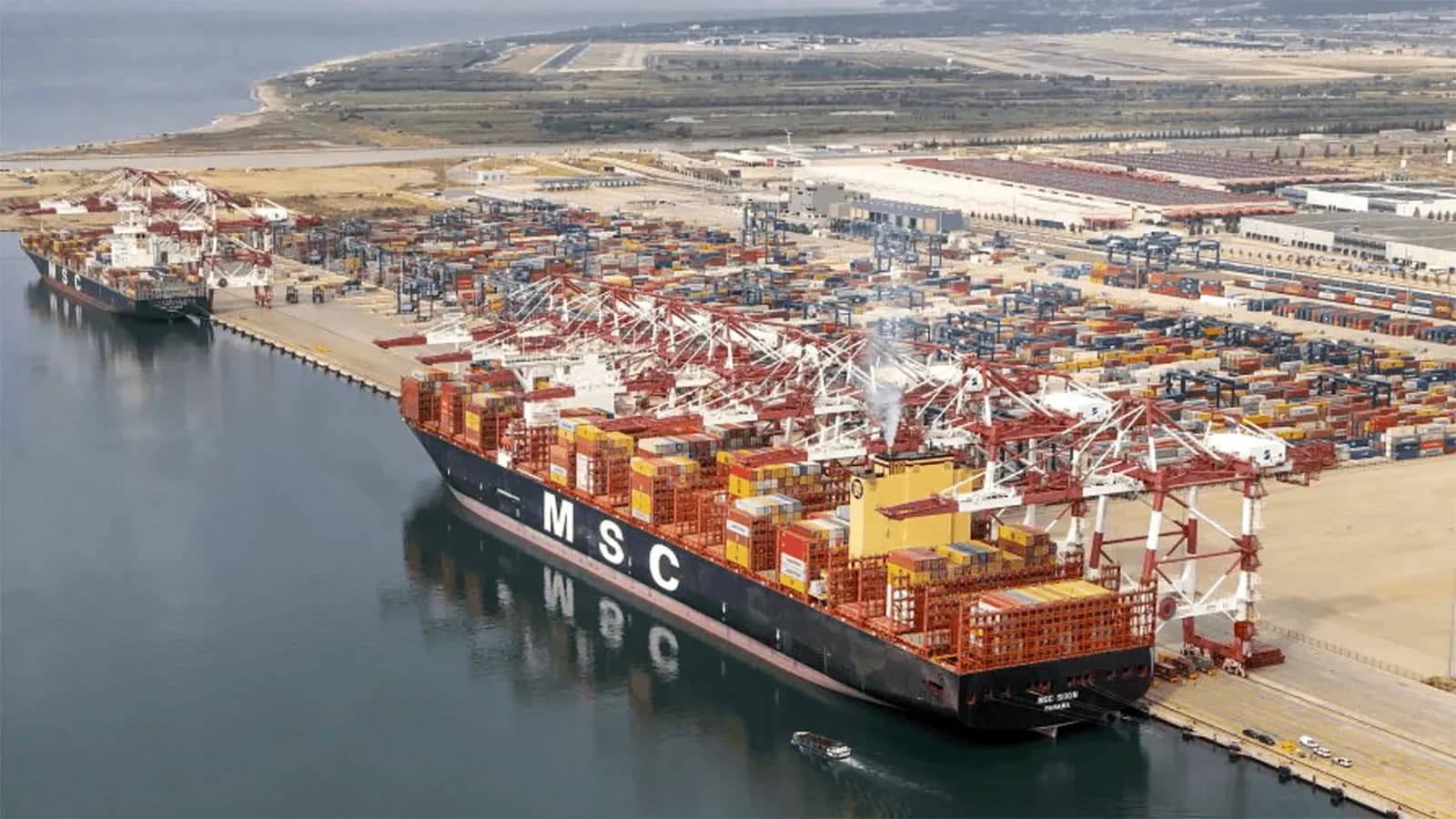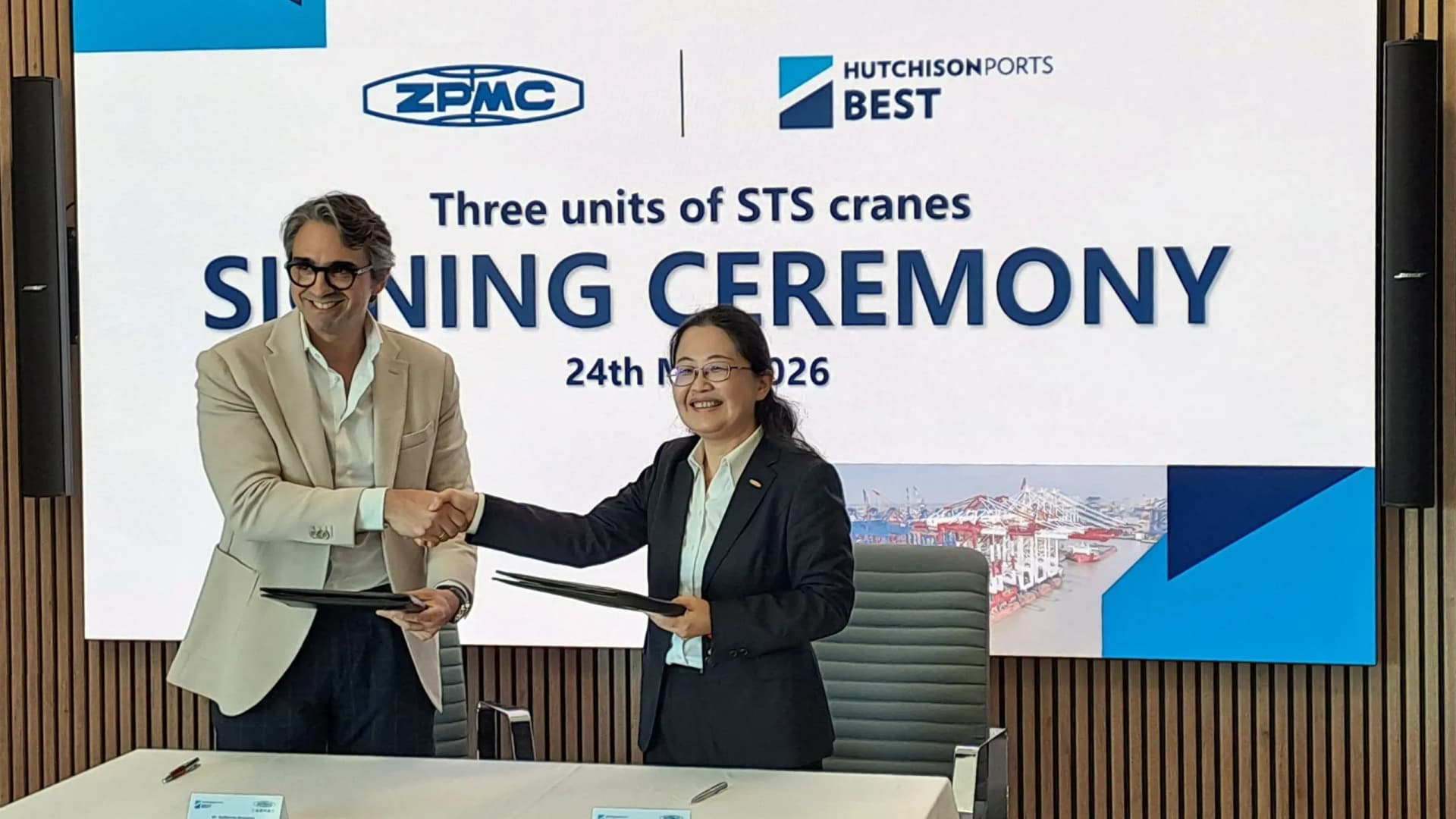
Hutchison Ports BEST has formalized, in a joint meeting with the vice presidency of the port equipment manufacturer ZPMC, the acquisition of three new state-of-the-art Ship-to-Shore (STS) gantry cranes. This transaction continues the working relationship between the container terminal and the industrial corporation, and adds to the scheduled reception next June of two complementary cranes that are currently in the shipping phase to the facilities.
The incorporation of this technical equipment is part of the company's planning guidelines and aims to modify the operational capacities of the terminal and review the conditions of its performance. The batch of machinery has design specifications that reach a height of 55 meters under the spreader's structure and a horizontal outreach capacity that covers 26 containers in width on the deck section, technical magnitudes calculated for the loading and unloading of the largest operational container ships on international routes.
The commissioning of these wharf cranes determines variations in different areas of the logistics management of the terminal in the Catalan capital. The increase in mechanical infrastructure is aimed at absorbing greater volumes of containerized goods, adapting the facilities to the loading requests arising from changes in global shipping routes. Likewise, a modification in the performance ratios per scale at the docking front is sought, favoring the streamlining of transport flows and reducing the time required to complete the maneuvers of the vessels.
In terms of energy efficiency, the units incorporate technologies aimed at moderating electricity consumption during lifting and moving cycles, a factor aligned with the sustainability regulations of the facility. The increase in resources at BEST impacts the technical conditions of the Port of Barcelona, affecting its operational parameters compared to other locations in the Mediterranean basin and modifying the inland transport alternatives for companies dedicated to export and import that channel their supply networks through these rail and maritime facilities.
The CEO of Hutchison Ports BEST, Guillermo Belcastro, has stated that the purchase of these three new STS cranes is being made with a supplier who has provided machinery to the terminal since the start of its operations. Belcastro detailed that, with the addition of these investments and the arrival of the two cranes scheduled for June, the company consolidates the necessary infrastructure to serve the heaviest tonnage vessels in the global market, modifying customer service conditions and basing its strategy on criteria of operational efficiency, digitalization, and reduction of the carbon footprint in the port environment of the Mediterranean.