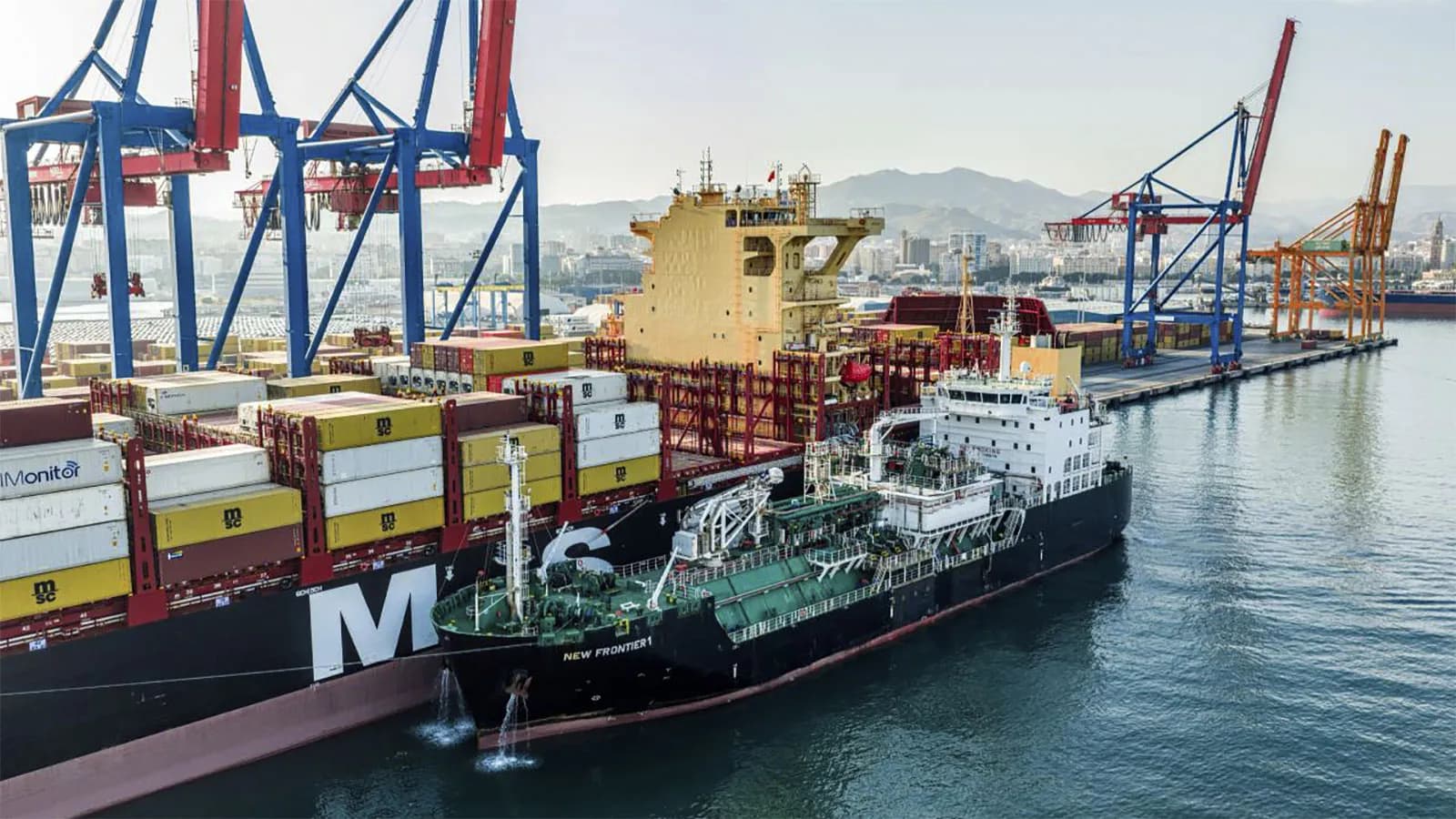
The traffic of goods through the ports of general interest of the State reached 181,907,205 tons in the accumulation from January to April 2026, which represents a decline of 0.3% compared to the same period of the previous year, according to data published by the Public Body Ports of the State. The figure shows, however, a moderation in the pace of decline after the more pronounced drops recorded in the first three months of the year: 4.5% in January, 1.3% in February, and another 1.3% in March.
By type of merchandise, general merchandise halted its decline and closed the quarter with a decrease of 0.5%, down to 91.10 million tons. Within this segment, conventional merchandise recorded a marginal increase of one-tenth of a percentage point, while containerized merchandise contracted by 0.8%.
In the context of containerized traffic, TEUs accumulated a growth of 4.2% until April, exceeding 6.15 million units, compared to the 3.6% recorded until March. Transit concentrated a large part of this advance, with a 6.1% increase and more than 3.22 million TEUs, followed by import-export traffic, which grew by 2.7% up to 2.22 million TEUs. National container traffic, for its part, remained practically stable, with a slight increase of 0.3%.
By ports, the Port of Algeciras led container movement with 1,568,696 TEUs accumulated, 8.5% more than in the same period of 2025. Valencia remained the second container port with 1,814,785 TEUs, a growth of 0.3%, followed by Barcelona, which recorded 1,260,831 TEUs (+2.3%). There were also notable increases in Castellón, with a rise of 70.1% up to 53,940 TEUs, Málaga (+29.1%, with 138,739 TEUs), and Alicante (+24.2%, 77,861 TEUs).
Liquid bulk improved its figures with 60.77 million tons moved in the accumulated, 2.9% more than between January and April 2025. By products, fuel oil recorded an increase of 13.1%, gasoline grew by 5.6%, natural gas rose by 4.9%, and chemical products increased by 7.9%. In contrast, crude oil fell by 2.4% and diesel by 3.2%. Among the ports, Barcelona experienced a notable growth in liquid bulk, with 25.2% more up to 6.13 million tons, while Ferrol-San Cibrao grew by 39.1% up to 1.05 million tons. Seville also recorded a strong increase of 59.2%, although on a smaller base.
Solid bulk moderated its decline to a total accumulated of 25.05 million tons, with a drop of 6.8%. Coal and petroleum coke fell by 22.8%, iron ore by 32.2%, and cement and clinker by 11.5%. In contrast, potash grew by 37.3% and phosphates by 53.8%. Gijón was the most affected port in this segment, with a decline of 36.2% down to 3.03 million tons.
The ro-ro traffic halted its decline until April with a decrease of 1.4%, down to 24.49 million tons, after recording sharper declines in the preceding months.
Regarding total port traffic by port authorities, the Port of Algeciras remained the first port in the system with 32.23 million tons, although it registered a decline of 5.1%. It was followed by Valencia, with 25.77 million tons (-3.3%), and Barcelona, which with 23.89 million tons and a growth of 6%, was the port that gained the most volume among the leading ports. Málaga (+29.6%), Alicante (+17%), and Ferrol-San Cibrao (+16.6%) also showed significant growth.
The number of merchant ships that passed through Spanish ports fell by 4.4% to 46,947 units, with a reduction of gross tonnage of 1.7%.
In terms of passengers, the first quarter closed with 10.45 million movements, 1.9% less than in the same period of 2025. Passengers in regular transportation registered a decline of 4.4%, down to 6.47 million. However, cruise passengers grew by 2.5%, with 3.97 million passengers, in a context where the number of cruise calls increased slightly to 1,597, twelve more than a year earlier.