The city of Marseille hosts the MEDPorts Forum 2026 on May 20 and 21, the annual meeting of the association of Mediterranean ports which this year is held under the theme "Mediterranean Ports 2026: Resilient Logistics and Green Corridors". The Port of Marseille Fos acts as the event's host, gathering representatives from port authorities, international organizations, energy sector companies, and logistical players from all shores of the Mediterranean.
The first day began with the celebration of the MEDPorts General Assembly, reserved for members of the association. During the meeting, attendees approved the incorporation of Transport Malta as a new full member, an admission that expands the network's presence in the central Mediterranean. The association, created in June 2018, currently groups more than 30 port authorities and four training centers from all shores of the Mediterranean and represents approximately 70% of cargo traffic and 90% of passenger traffic in the region. Its members include ports from Spain, France, Italy, Morocco, Tunisia, Greece, Slovenia, Croatia, Malta, Lebanon, Egypt, and Mauritania, among other countries.
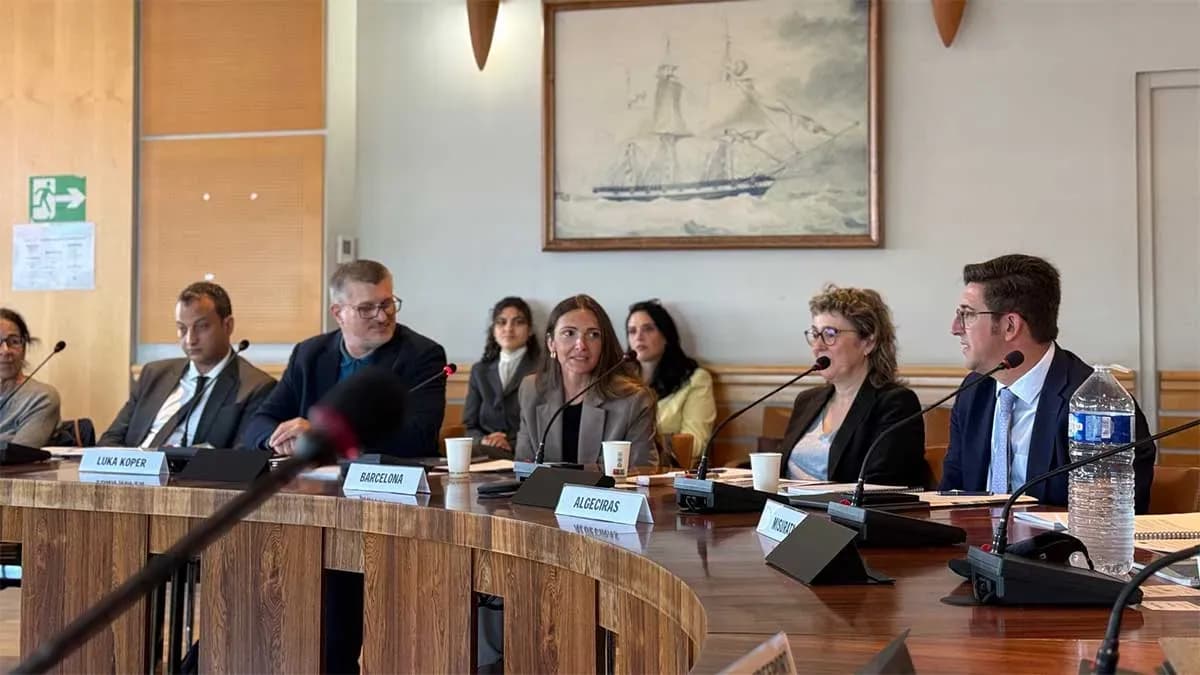
The inaugural session of the open forum featured speeches by Hervé Martel, chairman of the Board of the Port of Marseille Fos, and David Magro, president of MEDPorts and executive of Malta Freeport Corporation, who welcomed participants and emphasized the importance of Mediterranean port cooperation in a context of increasing geopolitical uncertainty. The meeting is also part of the Saison Méditerranée, a national cultural event promoted by the Institut Français, whose opening sequence takes place in Marseille between May 15 and 23.
One of the presentations that opened the first day was by Joan Cabezas, CEO of Nactiva, who addressed the transformation of Mediterranean ports to integrate nature into their operations. Cabezas presented the RegenPorts project, an initiative developed in collaboration with the Fundació BCN Port Innovation that works to turn ports into spaces for regenerating natural capital, with special attention to marine biodiversity. The program, launched in 2023 at the Port of Barcelona, utilizes the technology of Life Boosting Units (LBU), biomimetic micro-reefs that are installed on the walls of the docks to accelerate the appearance of marine life. After a pilot test in which 47 units were installed, the project sees the incorporation of 400 new structures. Cabezas noted that the Mediterranean is one of the richest and most valuable marine ecosystems on the planet, but also one of the most vulnerable, and that the protection and regeneration of this shared natural heritage constitutes a collective responsibility.