
CMA CGM has formalized the acquisition of Freightliner UK Intermodal Logistics, making the operation effective in the early hours of Friday, January 30. The move incorporates one of the most established freight railway operators in the United Kingdom into the French group's European logistics portfolio, expanding its intermodal offering in the maritime, land, and inland transportation segments.
The transaction responds to a long-expressed ambition by the French shipping company to deepen the role of rail within its integrated logistics model. For the British market, the operation signifies a significant change in ownership, and possibly in the direction, of a company that supports container flows between the country's deep-water ports and inland distribution centers.
Rodolphe Saadé, chairman and CEO of CMA CGM, framed the acquisition as both a symbolic and practical operation. "We are pleased to welcome the 1,600 colleagues of Freightliner Group Ltd, the leading intermodal freight railway operator in the United Kingdom, to the CMA CGM family," he stated, highlighting continuity for both the staff and the brand. This figure represents approximately two-thirds of the former company. The remaining 950 employees have become part of a new entity called Heavy Haul Rail, focused on the business of transporting bulk materials.
For the new intermodal business, Saadé described the agreement as an important step for the group and linked the integration of Freightliner to CMA CGM's broader strategy of strengthening logistics capabilities across the entire value chain. Rail, he asserted, will sit alongside maritime transport, terminals, and logistics as a central component of that model.
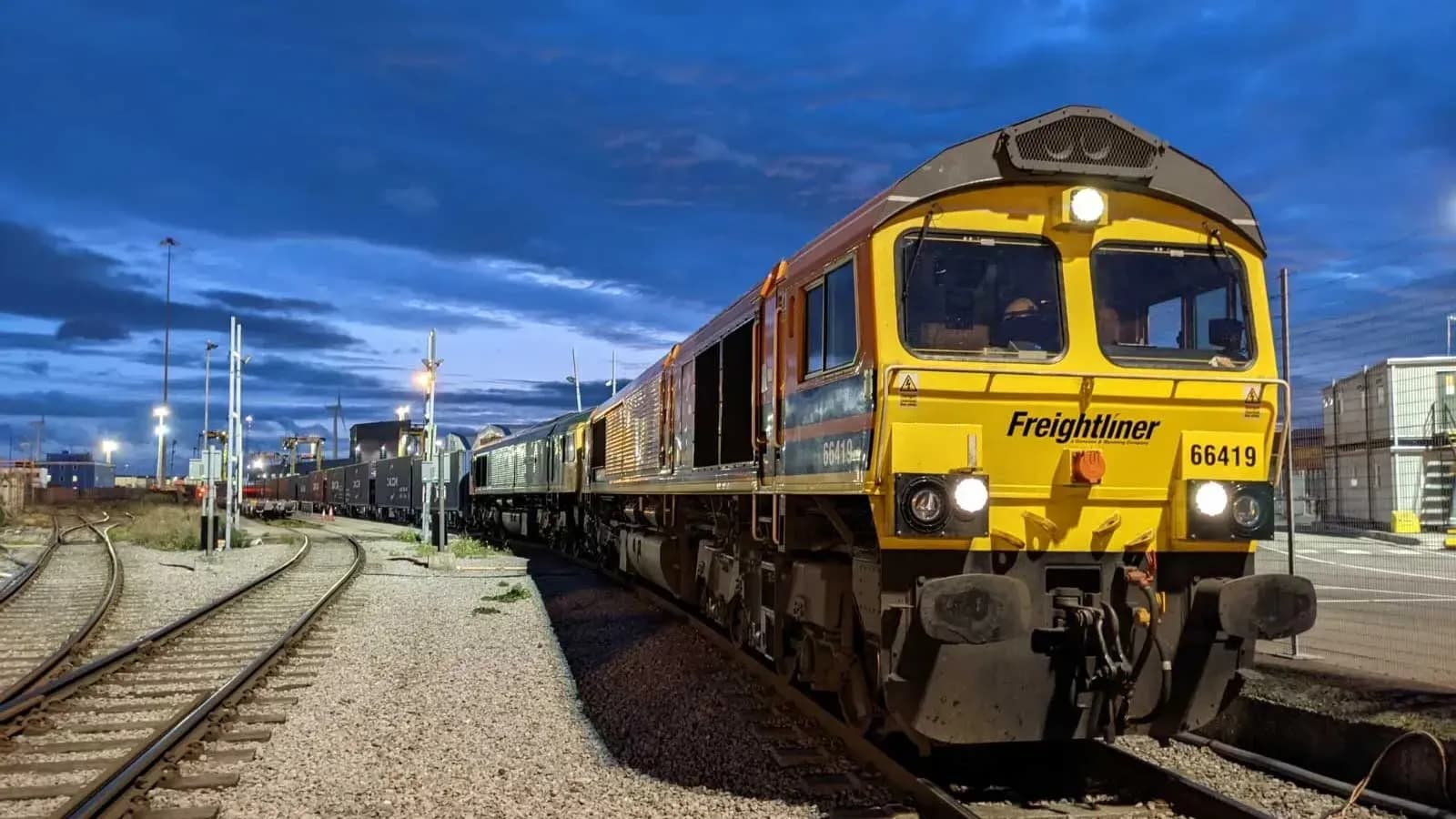
Freightliner is the largest intermodal freight railway operator in the United Kingdom, even after the separation of the bulk materials business. The company transports containers from all the major deep-water ports in the country and operates trains through a national network of inland terminals, both owned and open access. In addition to a large fleet of diesel units, primarily the ubiquitous Class 66 locomotives manufactured by EMD, Freightliner also has a fleet of electric locomotives, converted from high-speed passenger services. These are primarily used in their fast intermodal services on the busy mixed traffic West Coast Main Line.
Saadé made it clear that Freightliner's role goes beyond mere capacity. "By integrating Freightliner, the rail becomes a stronger pillar of our model," he stated. The executive cited better connections between ports and their hinterland, greater reliability in the supply chain, and "more efficient and lower carbon footprint transport solutions for our customers."
Freightliner has continued to invest in recent years. In the last twelve months, the company ordered 150 new intermodal freight cars, backed by the rolling stock leasing company Porterbrook, consolidating its position as the leading intermodal freight railway operator in the country. CMA CGM considers this capacity a key lever to accelerate the modal shift from road to rail.
"The United Kingdom has been a strategic market for CMA CGM for over 35 years," Saadé noted, positioning the acquisition as a long-term commitment rather than an opportunistic expansion. He added that the agreement "positions the group as a long-term player in the rail freight transport sector," with a clear ambition to invest and grow.
Freightliner will continue to operate as an independent, multi-user, and multi-client business within the group. CMA CGM indicates that the current management teams will retain operational autonomy, while benefiting from the group's global reach in maritime transport and logistics. For both companies, the emphasis is placed on scale, integration, and decarbonized growth.



