Ocean Network Express (ONE) and the Japanese classification society Nippon Kaiji Kyokai (ClassNK) have launched a joint research project to assess the effectiveness of roll damping tanks, known as Roll Damping Tanks (RDT), on large container ships.
The study will use measurement data collected on board vessels operated by ONE, which will be analyzed by ClassNK along with numerical simulations. The research aims to determine the capacity of these systems to reduce the rolling motion of container ships under real operating conditions and sea states.
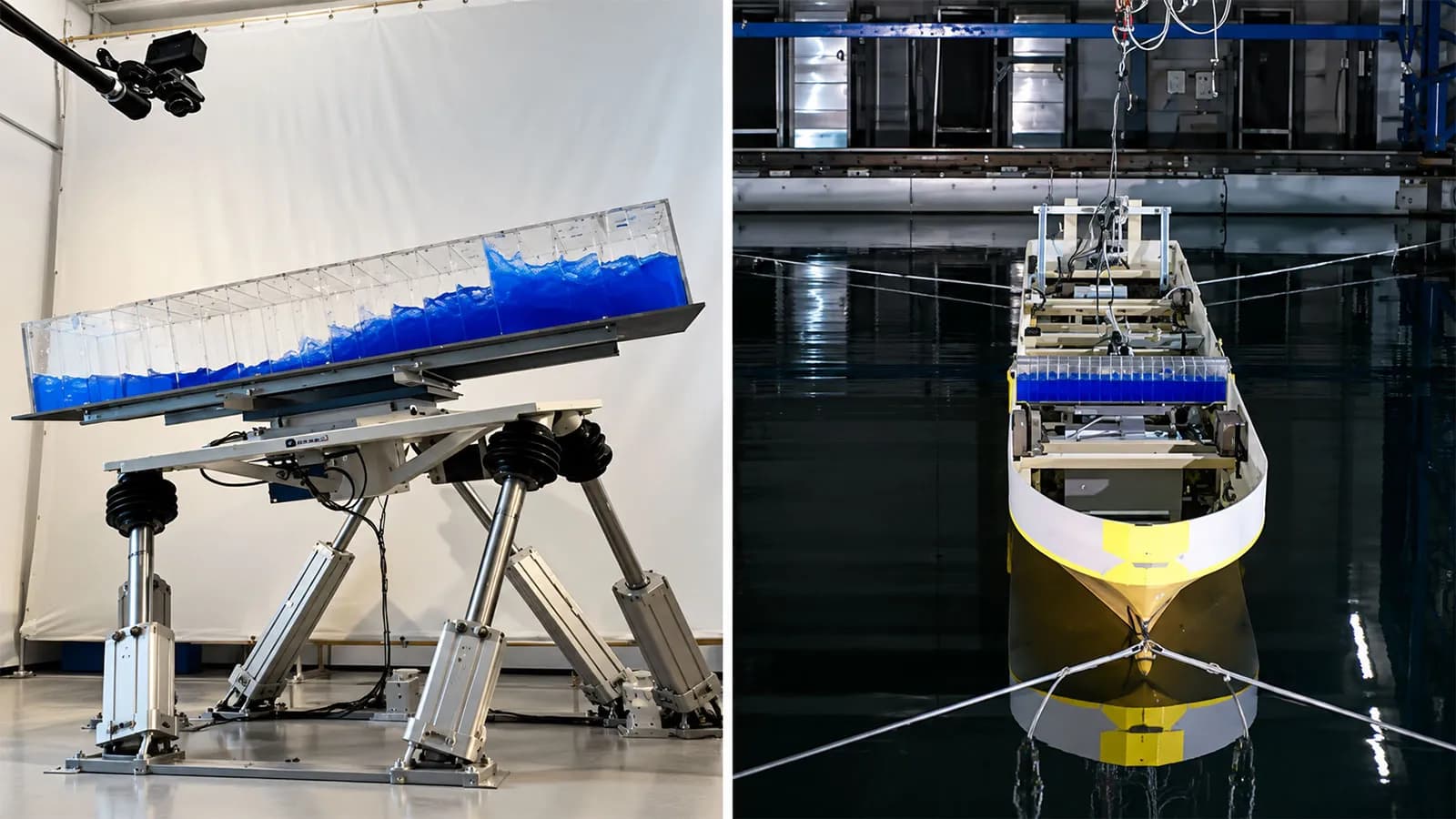
The RDT are designed to decrease the ship's roll by controlled movement of liquid inside a tank. This is a technology that has been used for a long time on passenger ships, research vessels, and other types of specialized units, although in recent years its installation has also extended to container ships.
The reduction of roll takes on special significance in large vessels intended for container transport, as excessive movements can increase the forces acting on both the cargo units and their securing systems.
ONE and ClassNK point out that effective reduction of these movements can contribute to the safety of navigation and transport of goods, as well as having effects on the distribution of containers on board and the operational flexibility of ships.
Despite the increased use of RDT in container ships, assessments conducted so far on their behavior in large units have primarily been based on tests with models and numerical simulations.
The available information at real scale, obtained directly through measurements on board during commercial operations and under different maritime conditions, remains limited, according to the two participating entities in the project.
The joint research aims to cover part of this data gap by analyzing information from vessels in ONE's fleet. The shipping company will provide operational records collected during navigation, while ClassNK will apply its experience in testing, numerical simulation, and technical analysis.
The combination of both types of information will allow comparing the results obtained through mathematical models with the behavior recorded on board container ships during their operations.
The project will thus analyze the reduction of roll provided by the RDT and their behavior at real scale. The two organizations aim to establish a practical methodology that allows quantifying their effectiveness under different operating conditions and sea states.
Kumi Miyashita, Corporate Officer of ClassNK, explained that the collaboration will allow verifying the operation of these systems through data from real operations. The entity will combine full-scale measurements with numerical analysis to establish a basis for evaluating the RDT under real conditions.
On the part of Ocean Network Express, the Vice President of Global Vessel Operations, Masaharu Urabe, noted that the project will use operational data obtained by the shipping company along with the technical analysis of ClassNK to practically determine the behavior of these systems.
ONE believes that the information obtained can be applied to the analysis of the safety of operations of its vessels and to issues related to the distribution and loading capacity of containers.
The research also seeks to provide more information about the effect that these systems may have on the forces borne by the containers and their securing elements when the ship is subjected to rolling movements.
The behavior of large container ships under certain sea states is one of the factors taken into account in both loading planning and the arrangement of containers and sizing of systems used to keep them secured during navigation.
The roll damping tanks act on this movement by displacing the liquid contained inside. The research of ONE and ClassNK will focus on checking to what extent the operation observed during real operations aligns with the results previously obtained through models and simulations.
The cooperation contemplates that ONE continues to provide operational data while ClassNK develops the corresponding technical analyses. Both entities will use the results to expand the available knowledge on the use of RDT in large container ships and their behavior during navigation.
The project is being developed in a context of increasing use of this type of system in maritime container transport, after its application for years in other types of vessels. The research will allow obtaining information directly from units in service to evaluate their operation at real scale.