The Operation Passage of the Strait 2026 begins on June 15 with the debut of the European biometric control in Algeciras and Tarifa

Landaluce estimates the effort of the APBA for the Entry/Exit System at 14 million euros; Barcones expects a 3% growth in passengers and vehicles over the record of 2025.

The Operation Passage of the Strait 2026 begins on June 15 with the debut of the European biometric control in Algeciras and Tarifa
Add us as a preferred source on Google

The Operation Passage of the Strait (OPE) 2026, named Marhaba by the Moroccan authorities, starts on June 15 with the mandatory implementation of the Entry/Exit System (EES) of the European Union, a novelty that has required the doubling of the usual devices at the ports of Algeciras and Tarifa. This was stated on Thursday by the president of the Port Authority of the Bay of Algeciras (APBA), Gerardo Landaluce; the General Secretary of Civil Protection and Emergencies of the Ministry of the Interior, Virginia Barcones, and the deputy delegate of the Government in Cádiz, Blanca Flores, before presiding over the meeting of the Provincial Director Committee of the OPE.

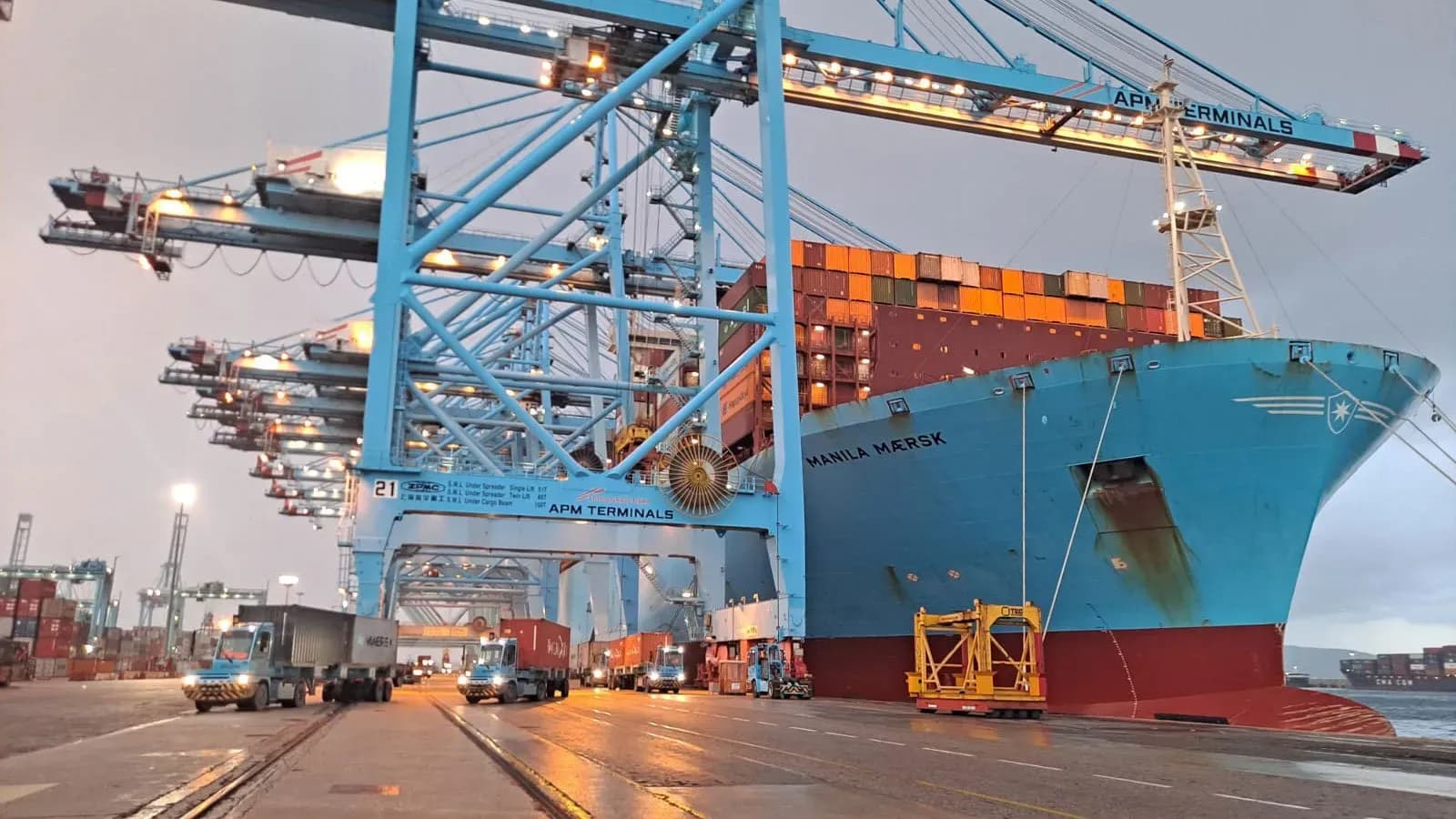
Landaluce pointed out that there are more than 750 people involved in the human device of the APBA, including personnel from the operations area, port police, and temporary hiring. The planned infrastructure includes more than 13 docks — eleven in Algeciras and two in Tarifa — for both ro-pax and ro-ro traffic. The port president quantified the ordinary economic effort at 2.2 million euros in spending and 600,000 euros in investment, to which is added the expenditure linked to the EES: "we are practically talking about fourteen million euros for the devices and also for support and reinforcement personnel for the implementation of the Entry/Exit System," he noted.

For her part, Virginia Barcones recalled that this is the thirty-sixth edition of the OPE and that it marks forty years since the Ministry of the Interior took over the coordination of the operation in 1986. The previous edition closed with a historical record of 3.5 million people, 850,000 vehicles and 12,000 rotations, a figure to which the Bay of Algeciras accounts for around 70-75%. For 2026, the forecast is a growth close to 3% in both passengers and vehicles, after the Algeciras port grew last year above the average of the whole.

The main operational novelty is the mandatory application of the European biometric control, based on facial recognition, fingerprints, and passport reading. Barcones specified that the first registration requires a few additional seconds, while the subsequent steps are resolved within seconds. The community regulation provides the possibility of temporarily suspending the system for periods of six hours — extendable if circumstances persist — a decision that corresponds to the National Police when waiting times compromise the safety of the operation. In that case, traditional passport control would be resumed. As an additional measure, the deputy delegate of the Government may decree the interchangeability of tickets between shipping companies if conditions so advise.


The redesign of flows in the port area includes, as detailed by Landaluce, a first point of discrimination at the entrance through the northern access that separates EU citizens from non-EU citizens. Next, the circuit is subdivided by destination — Tangier Med, Ceuta — and an additional line is enabled for users without a closed ticket. Llano Amarillo and the Galera area will have specific parcels for non-EU citizens, and biometric registration boxes will be located near the usual credential and check-in areas, supported by iPads for mobile accreditation.

Flores pointed out that the measures have been coordinated bilaterally with Morocco in successive meetings held throughout the year, the last of which was the day before the press conference. The deputy delegate insisted on recommendations for travelers: to purchase closed tickets, preferably online or through authorized agencies, and to consult the new signage deployed at the accesses. Regarding the state of the roads, Flores acknowledged that the series of storms recorded between November and March affected the province and required exceptional intervention with micropiles at kilometer point 91 of the N-340, due to signs of landslides. Both in Vejer and Tarifa a second lane has been opened to allow traffic in both directions, and road officials will work on a 24/7 basis throughout the operation. Regarding the works on the southern access to Algeciras, which currently prevent the transit of trucks through that route, it was indicated that the provincial director of Roads would provide details in the subsequent meeting of the Committee.

Barcones added that this year's planning incorporates climate variables more heavily, in light of the forecast of more intense and prolonged heat waves, with the provision of shaded areas, water supply, and monitoring of waiting times due to their impact on elderly and young people. The operation mobilizes nine ministries, eighteen public bodies, and entities such as the Red Cross, Civil Protection volunteers, Maritime Captaincy, and the Port Authority itself. The weekends identified as critical are the last days of July and the first days of August on the outbound phase, and the last two weekends of August on the return.

The 2026 edition thus combines a volume likely to exceed the record of 2025 with the first full application of the European biometric control in the main maritime passenger corridor between two continents, a scenario that tests the logistical capacity of the APBA and the operational design coordinated between the Spanish and Moroccan administrations.

- A D V E R T I S I N G -

Share

Related content

You may also be interested in

NEXT TOTAL SOLAR ECLIPSEAugust 2, 2027

Totality returns to the Strait of Gibraltar

In less than a year, the Moon's shadow will sweep across southern Spain with over 4 minutes of total darkness over Algeciras, Tarifa, and Gibraltar.

---Days
--Hours
--Mins
--Secs
Explore Eclipse Special