
Researchers at the University of Cádiz are working on the development of a platform capable of analyzing and correlating real-time environmental and operational data from ports to detect risk situations early and facilitate a rapid response from port authorities. The initiative is part of the PANORAMA project and takes the Port Authority of Algeciras Bay (APBA) as a case study, one of the main logistics nodes in southern Europe.
The research is directed by professors Juan Boubeta-Puig and Guadalupe Ortiz, from the UCASE Software Engineering group at the University of Cádiz. The consortium also includes the University of Almería, the University of Castilla-La Mancha, the University of the Republic of Uruguay, and the APBA itself, which provides real data and knowledge of the port environment for the development and validation of the platform.
The system that the team is working on integrates information from multiple sources, particularly from the sensor networks deployed in port facilities. The platform will cross-reference data on air quality, noise, meteorology, water quality, maritime traffic, and logistical activity, with the aim of identifying patterns that may indicate an environmental or operational incident and generating automatic alerts that help improve port management and reduce the impact on the environment, port cities, and their socioeconomic environment.
PANORAMA relies on various digital technologies that operate in combination: complex event processing, event-driven architectures, collaborative internet of things, and digital twins. The integration of these tools will allow for the construction of a virtual representation of the port that is continuously updated with real data, useful both for continuous monitoring of activity and for simulating scenarios before making operational decisions.
In the case of the Bay of Algeciras, the platform will leverage the existing sensor infrastructure in the facility to integrate information that currently comes from independent systems. Researchers anticipate that unifying these sources will offer a comprehensive view of port operations and improve its reaction capacity to possible contamination episodes or incidents in daily operations.
Although the development takes place in the Algeciras scenario, the team has designed PANORAMA with the intention of being transferred to other facilities. Its modular architecture will allow the platform to be adapted to ports of different sizes and configurations, intending to serve as a basis for a more digitized and sustainable management of maritime transport across the entire port system.
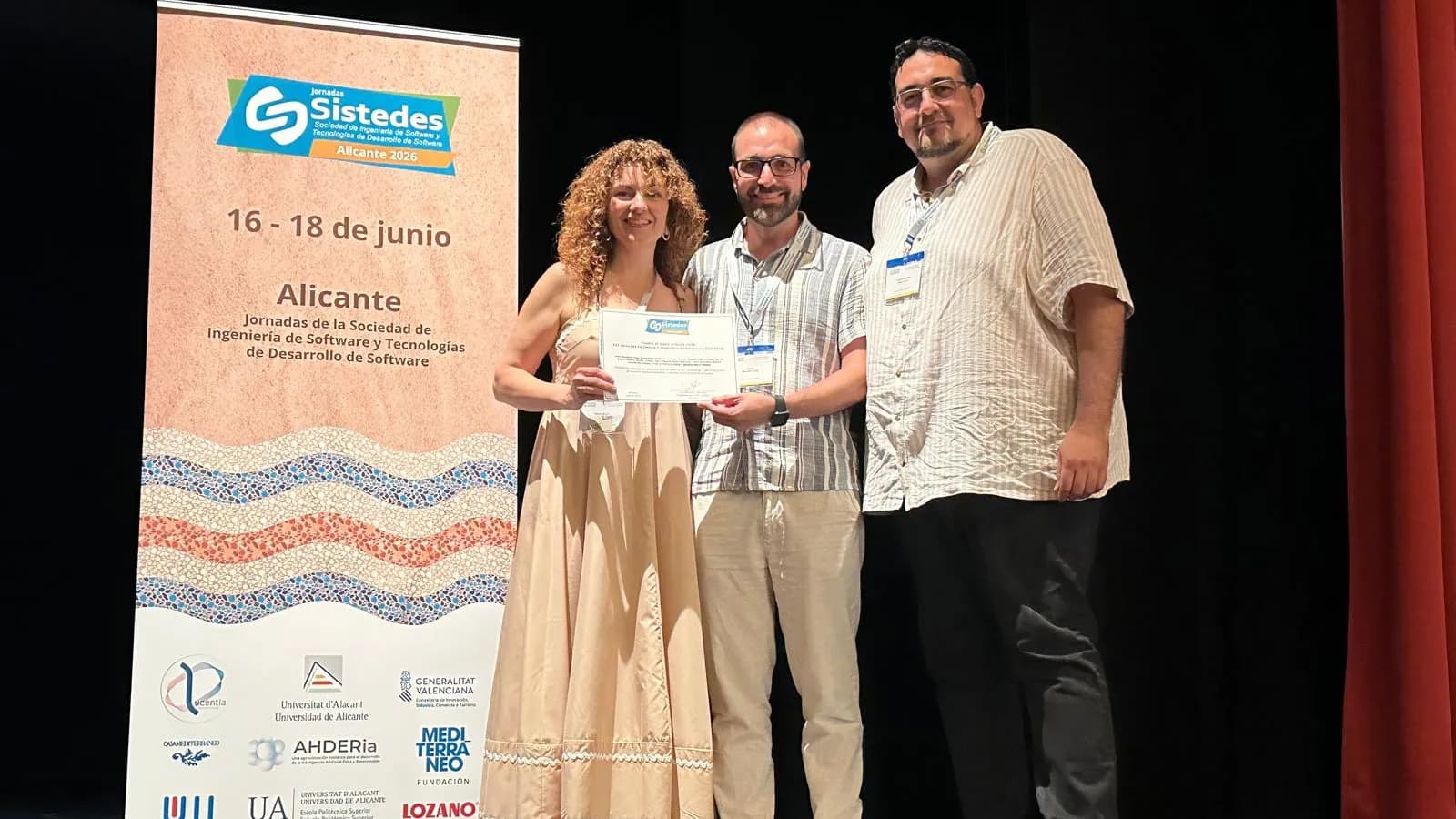
The project has received academic recognition at the XXI Conference on Science and Engineering of Services (JCIS 2026), framed within the Conference of the Society of Software Engineering and Software Development Technologies (SISTEDES 2026), held in Alicante. The scientific article presenting the platform won the Best Short Article Award, granted by the conference's scientific committee to the research presented by the University of Cádiz team.
PANORAMA, identified with the code FEDER-UCA-2024-A2-17, is co-financed by the FEDER Andalucía Operational Program 2021-2027 and by the Department of University, Research, and Innovation of the Junta de Andalucía. Its development calendar will continue over the coming years, with new validation phases in the environment of the Bay of Algeciras.
The integration of data-driven platforms, artificial intelligence, and digital twins has become one of the regular lines of work in the field of port digital transformation, both in Spain and throughout Europe. Projects of this type aim to improve operational efficiency, reduce environmental impact, and facilitate coordination among the various stakeholders involved in the activity of a port facility.