
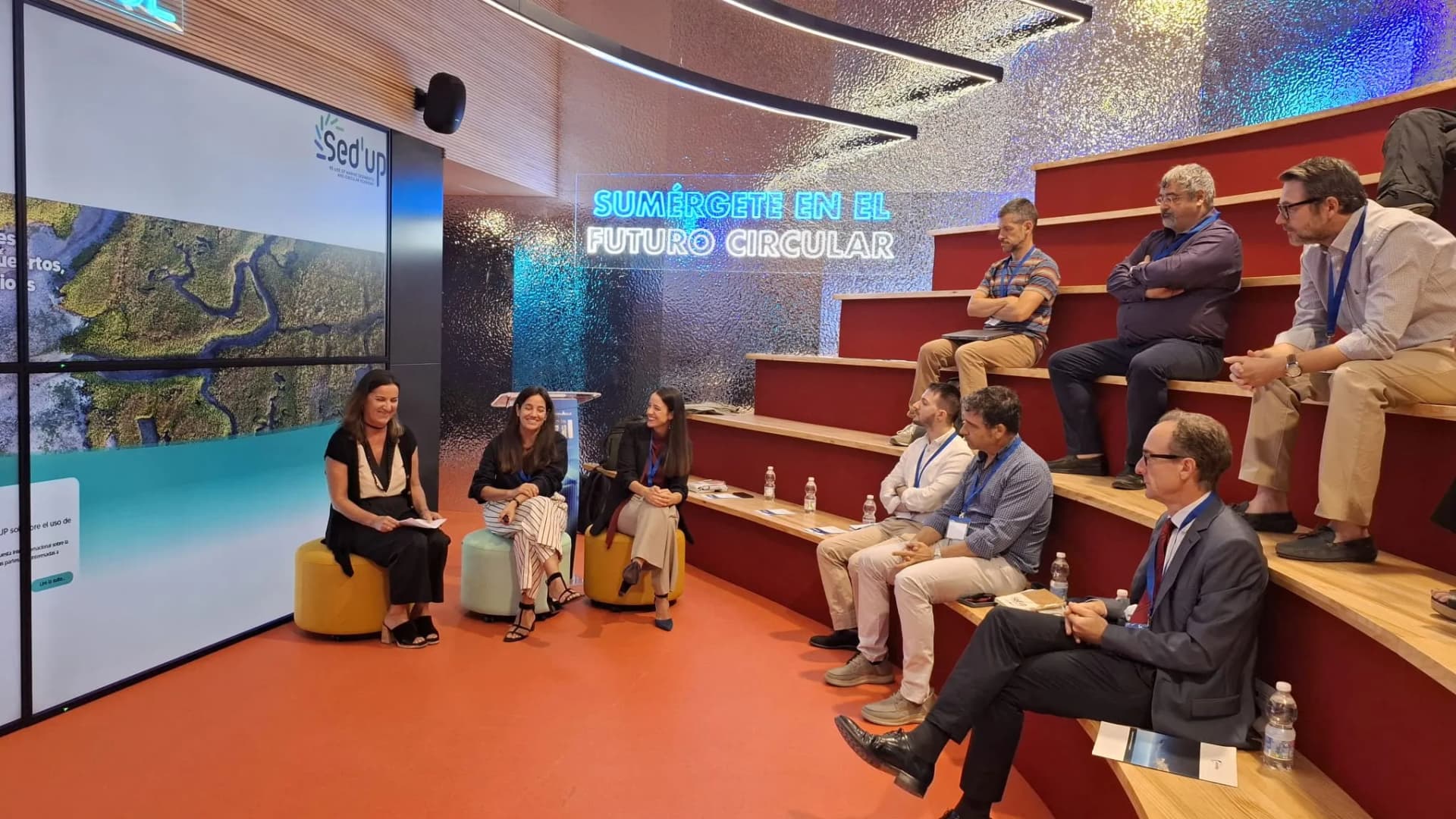
The University of Cádiz (UCA) celebrates this September 29 at the Incubazul-Zona Base space of the Cádiz Free Trade Zone the first Regional Workshop in Spain of the European project SED’UP, a day dedicated to analyzing the possibilities of reuse and valorization of sediments from port dredging.
The meeting brings together representatives from universities, scientific centers, administrations, port authorities, and companies to examine the constraints affecting the utilization of these materials and the possibilities of incorporating them into circular economy models.
SED’UP, acronym for Sustainable Environmental Decontamination and Upcycling of Port Dredged Sediments, studies strategies for decontamination, treatment, and reuse of sediments extracted from maritime ports. Its possible applications include construction, environmental restoration, coastal regeneration, and ecosystem recovery.
The event, organized in person with the possibility of remote follow-up, is coordinated by María Laura Martín, professor at the University of Cádiz and principal researcher of Work Package 2 of the project, and María del Mar García-Pimentel, postdoctoral researcher at the UCA and member of the same working group. Both participate in activities related to the sustainable valorization of sediments.
The program analyzes the issue from three main areas: regulation, technical solutions, and training and financing mechanisms. Participants include specialists from the Center for Studies and Experimentation of Public Works (CEDEX), the port authorities of the Bay of Algeciras, Huelva, and Seville, the University of Cádiz, Ports 4.0, and the company TODOBARRO.
Raúl Martín from CEDEX addresses the regulatory framework applicable to the material from dredging before and after operations, while Fidel Ruiz from the Port Authority of the Bay of Algeciras analyzes issues related to the necessary infrastructures, administrative procedures, and the costs associated with managing these materials.
The experience from different Spanish ports occupies another part of the program. Rocío López Picón from the Port Authority of Huelva presents actions developed under the approach Working with Nature, related to the management of materials from dredging, ecological restoration, and the development of port infrastructures adapted to environmental conditions.
Antonio Bejarano from the Port Authority of Seville presents actions related to the incorporation of nature-based solutions in port and river spaces. Raquel Sánchez, a researcher linked to TODOBARRO through a Torres Quevedo contract, discusses experiences on sediment valorization and climate resilience in port and river environments, with references to the SAFARI Ports and BIOECOREST projects.
The program also incorporates the analysis of the professional and training needs associated with the circular economy in the port sector. María del Mar Cerbán, professor at the UCA and coordinator of the joint university master's program SEA-EU in Port Management and Logistics (MIPMAL), participates in this part of the meeting.
José Llorca Ortega from Ports 4.0 presents the instruments and funding opportunities available for the development of innovative projects linked to the port sector.
The workshop is part of the European project SED’UP, developed between 2025 and 2028 within the Interreg Atlantic Area 2021-2027 program. The initiative has a total budget of €1,959,100.54, co-financed by 75% by the European Regional Development Fund (ERDF).
The project is coordinated by the University of Western Brittany in France and brings together six beneficiary partners and five associated entities from France, Spain, Portugal, and Ireland. The University of Cádiz participates in the consortium as one of the beneficiary partners.
The management of materials extracted through dredging constitutes a recurring issue for ports, both due to the maintenance needs of channels and navigation areas, and due to the environmental and administrative conditions that determine the subsequent destination of sediments.
SED’UP aims to explore alternatives so that part of these materials can change from their traditional consideration as waste to their use as a resource, always within the corresponding technical and environmental requirements.
The Cádiz meeting will also serve to identify the barriers that condition these processes, from regulation and costs to the availability of technology and infrastructures, as well as to analyze possible avenues of collaboration among port authorities, universities, administrations, companies, and funding bodies.