
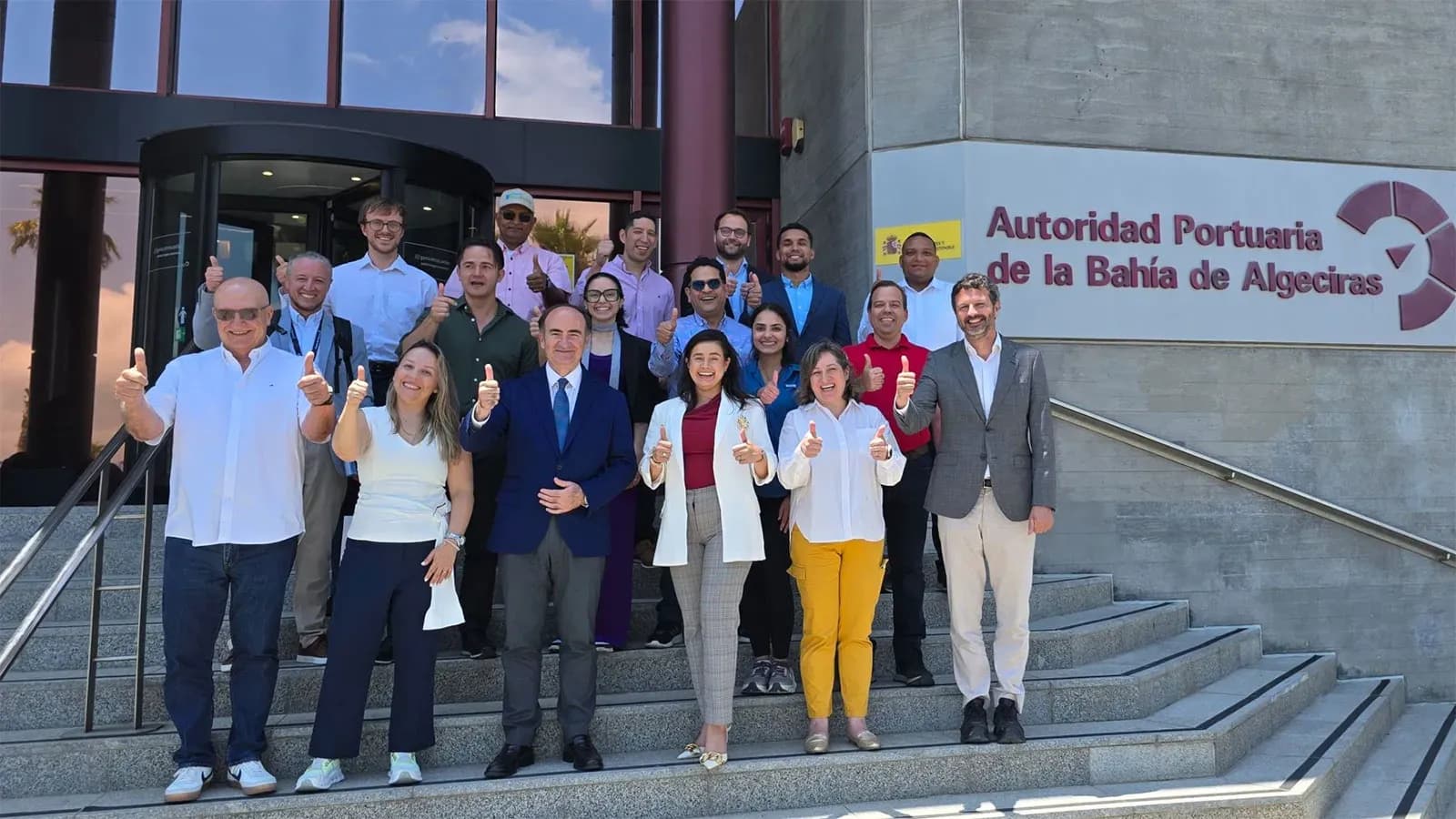
The Port Authority of the Bay of Algeciras (APBA) has begun work to define the roadmap that will connect the Panama-Algeciras Green and Digital Maritime Corridor with the Colombia-Panama corridor. The initiative has been presented as part of the international workshopPowering Green Maritime Corridors through electrification, held this week in the Campo de Gibraltar and structured as a technical meeting among port, shipping, and institutional officials from the three countries.
During the day, the APBA met with maritime-port actors and representatives of public agencies from Panama and Colombia to define the next steps in aligning both corridors. The meeting has been posed as a starting point for decarbonization initiatives developed at each end of the transatlantic route to converge in a shared strategy, capable of providing operational and energy continuity to vessels covering traffic between Europe and Latin America.
Among the issues addressed at the meeting were the projects for the production and storage of alternative fuels that the Port of Algeciras is working on under the umbrella of the Green Energy Hub Algeciras Bay, the initiative that brings together public and private efforts in the Bay of Algeciras to produce, distribute, and use low-emission fuels. Participants also reviewed projects for the production of new fuels being developed in Colombia, in a context where the South American country is beginning to explore its potential as a producer of green hydrogen, ammonia, and methanol for international markets.
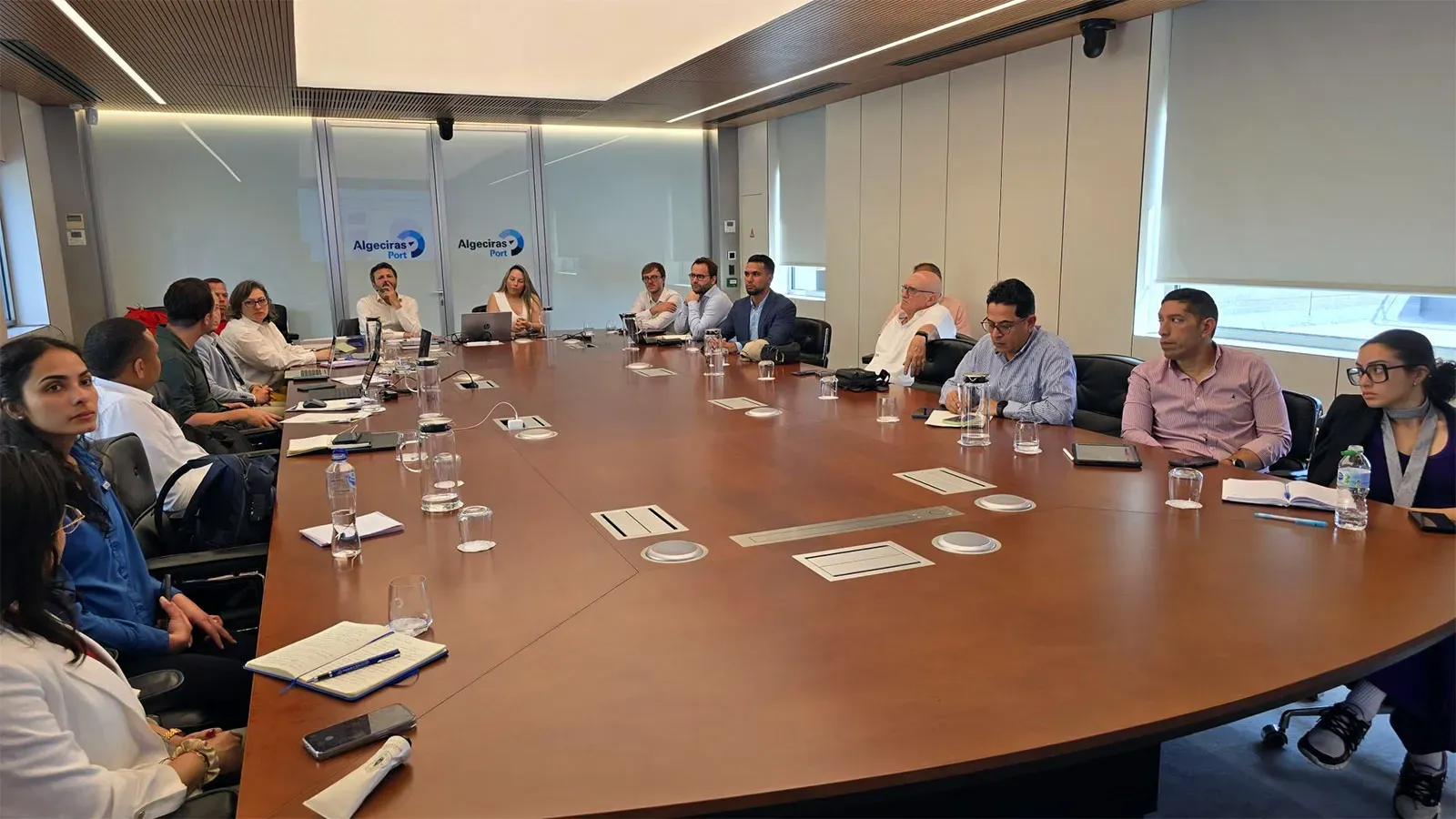
The corridor between Algeciras and Panama has played a central role in the discussions. The connection between both enclaves was selected by the European Commission as a flagship project and has the support of Global Gateway, the community instrument aimed at strengthening international connectivity and relations with strategic partners, with a special focus on Latin America. The inclusion of Colombia in this work scheme expands the geographic reach of the initiative and opens the door to a trilateral network that combines the logistical capacity of the Strait with the position of the Panama Canal and the future Colombian production of sustainable fuels.
The day complements the workshop held this week by the APBA together with the Panama Canal, the Port Authority of the Bay of Cádiz, State Ports, and the University of Cádiz. That meeting, organized in the UCA Mar del Lago Maritime building in Algeciras, brought together nearly fifty sector leaders from Panama, Colombia, and Spain, and dedicated its sessions to analyzing OPS (Onshore Power Supply) systems, the electrification of terminals, and the implementation of alternative fuels in port operations.
At that first meeting, the OPS, electrification, and automation projects developed by the Port Authority of the Bay of Algeciras, APM Terminals Algeciras, and TTI Algeciras were presented, along with the implementation schedule and the applicable European regulatory framework. Participants also reviewed the challenges faced by Panamanian terminals and future plans linked to the Panama Canal, including the operational aspects of the Net Zero Slot program, the reservation quota system for passage through the canal intended for vessels equipped with dual-fuel engines.
The second day of the workshop focused on initiatives such as the first intercontinental green line between Tarifa and Tangier City and on the applications of green hydrogen in port operations, in addition to including technical visits to the Algeciras facilities and the already operational OPS system at the Cadiz Cruise Dock. Both meetings, held consecutively, configure the same work block aimed at transforming political commitments into concrete projects with timelines, identified investments, and a distribution of responsibilities among the administrations and operators involved.
Decarbonization of maritime transport has become one of the shared challenges among ports, shipping companies, terminals, and logistics operators, in an increasingly demanding European regulatory context and with the net zero emissions horizon set for 2050. The articulation of green corridors between both sides of the Atlantic responds to the need to offer supply and electrical connection infrastructure throughout the entire transport chain, avoiding operational bottlenecks for vessels covering intercontinental routes during the energy transition.
The connection between the Algeciras-Panama and Colombia-Panama corridors is configured, in this scenario, as a piece of a broader network that aims to link the main Atlantic nodes around the same energy transition agenda. The roadmap that is now beginning to be defined will establish the technical commitments, temporal milestones, and governance mechanisms necessary for the three countries to advance in a coordinated manner.