
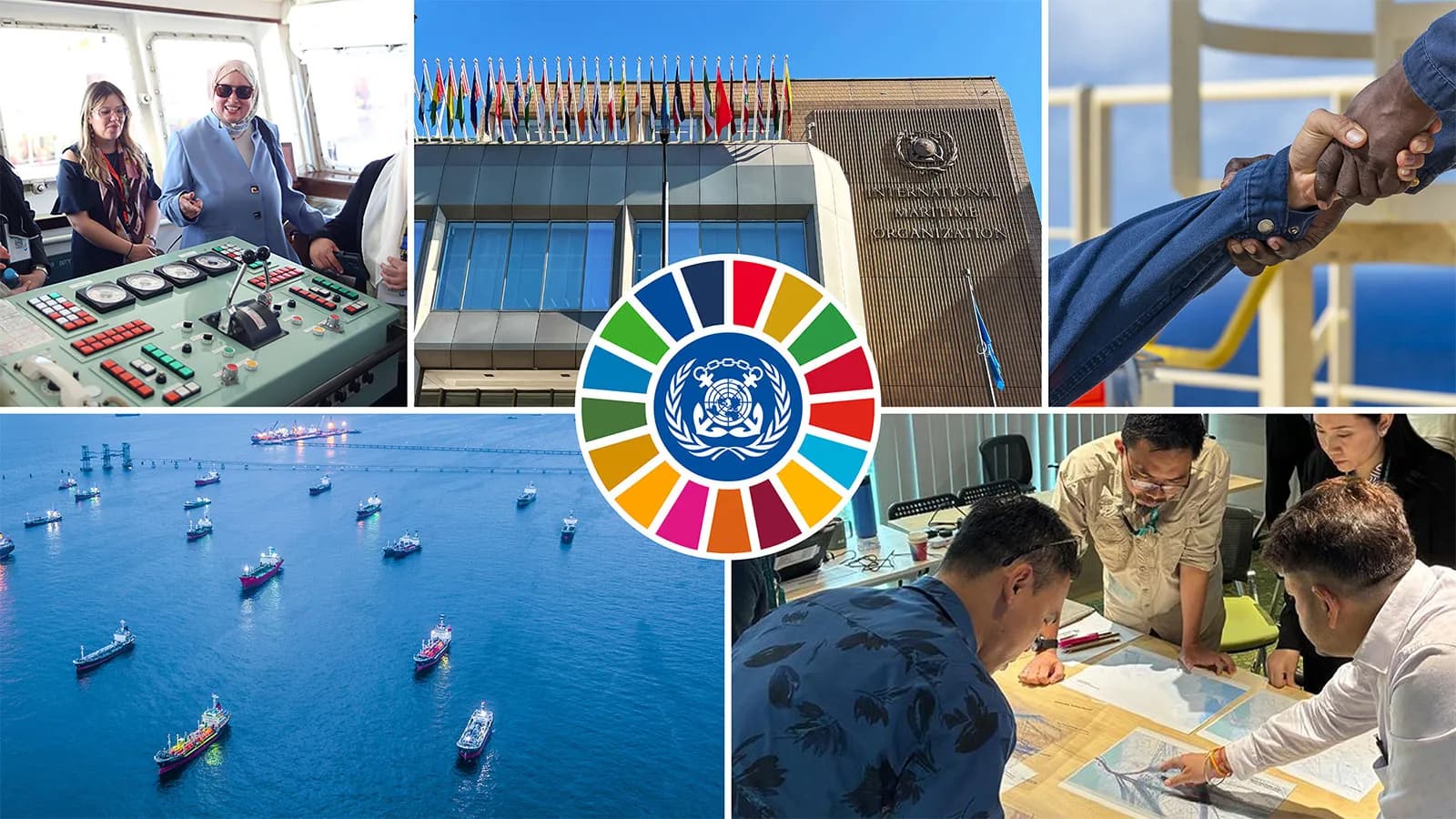
The International Maritime Organization (IMO) celebrates this Thursday, September 24, World Maritime Day 2026 with a campaign focused on turning international standards agreed upon by states into effective measures within national legislation and in the daily operations of maritime transport.
For the first time, the organization will maintain the chosen theme for this commemoration over two years, 2026 and 2027, centered on the shift from policy to practice and the effective application of the international maritime regulatory framework. This decision allows member states and organizations related to the sector to develop actions related to technical assistance, training, and compliance with the standards over a more extended period.
The day is celebrated in a context conditioned by geopolitical conflicts and their consequences on commercial navigation. The IMO notes that merchant vessels have suffered attacks in different conflict zones, from the Strait of Hormuz to the Black Sea and the Sea of Azov, with casualties among seafarers and effects on international trade and supply chains.
The Secretary-General of the IMO, Arsenio Domínguez, has positioned the application of the standards as one of the central elements of his message on the occasion of the day. He has stated that international regulations will allow for a maritime transport system that is 'safer, more resilient, and cleaner when applied worldwide.'
Domínguez has also positioned seafarers at the center of this process. 'The application must make a difference where it matters most: for the people who work at sea. Seafarers come first. Always,' he indicated in his institutional message.
The campaign starts from the recognition that the adoption of treaties, codes, and international guidelines does not guarantee their effects on maritime activity by itself. Its operation later depends on member states incorporating the provisions into their legislation, establishing the corresponding administrative mechanisms, having qualified personnel, and carrying out the inspection and supervision tasks foreseen.
This issue has acquired special relevance in 2026 following the conclusion of the first cycle of the IMO Member States Audit Plan (IMSAS). Since this mechanism became mandatory in 2016, 168 member states, equivalent to 94% of the organization's members, have been audited.
The audits analyze the degree of compliance with the obligations arising from the main instruments of the IMO and have allowed the identification of recurring problems in different maritime administrations. These include difficulties in moving international rules into national legislation, the lack of technical knowledge, certain infrastructure shortages, and existing deficiencies in vessel supervision.
The results of IMSAS will now serve to determine the technical cooperation and training needs. The IMO plans to direct these programs towards the areas and countries where greater gaps have been identified, with specific attention to least developed countries and small island developing states.
The assistance includes support for drafting or updating national maritime legislation, developing administrative structures, and improving systems aimed at ensuring compliance with international obligations. This also includes training programs directed at administrations, ports, and seafarers, along with mechanisms for sharing knowledge and experiences among states.
The work program associated with the 2026 and 2027 campaign includes issues related to maritime safety and new technologies, preparing maritime transport for decarbonization, combating the fraudulent registration of vessels and other forms of maritime fraud, facilitating trade, digitization, logistics chain resilience, cybersecurity, and marine environment protection.
The IMO has over half a century of international treaties accompanied by codes, recommendations, and guidelines regulating areas such as vessel safety, crew training, prevention of pollution, and maritime protection. The organization believes that the effectiveness of this system depends on the ratification of the instruments, their incorporation into national legal orders, and their continued compliance.
The main celebration of World Maritime Day takes place this Thursday at the IMO headquarters in London, which will be illuminated blue during the night as part of the international campaign. The organization has also invited member states and entities related to the sector to light up representative buildings and sites.
The program will continue on October 26 and 27 with the parallel event for World Maritime Day in Busan, Republic of Korea. The scheduled sessions will address, among other issues, the responsibility of governments in implementing the standards, international cooperation, the role of shipping companies and shipyards, and the training of maritime professionals.