
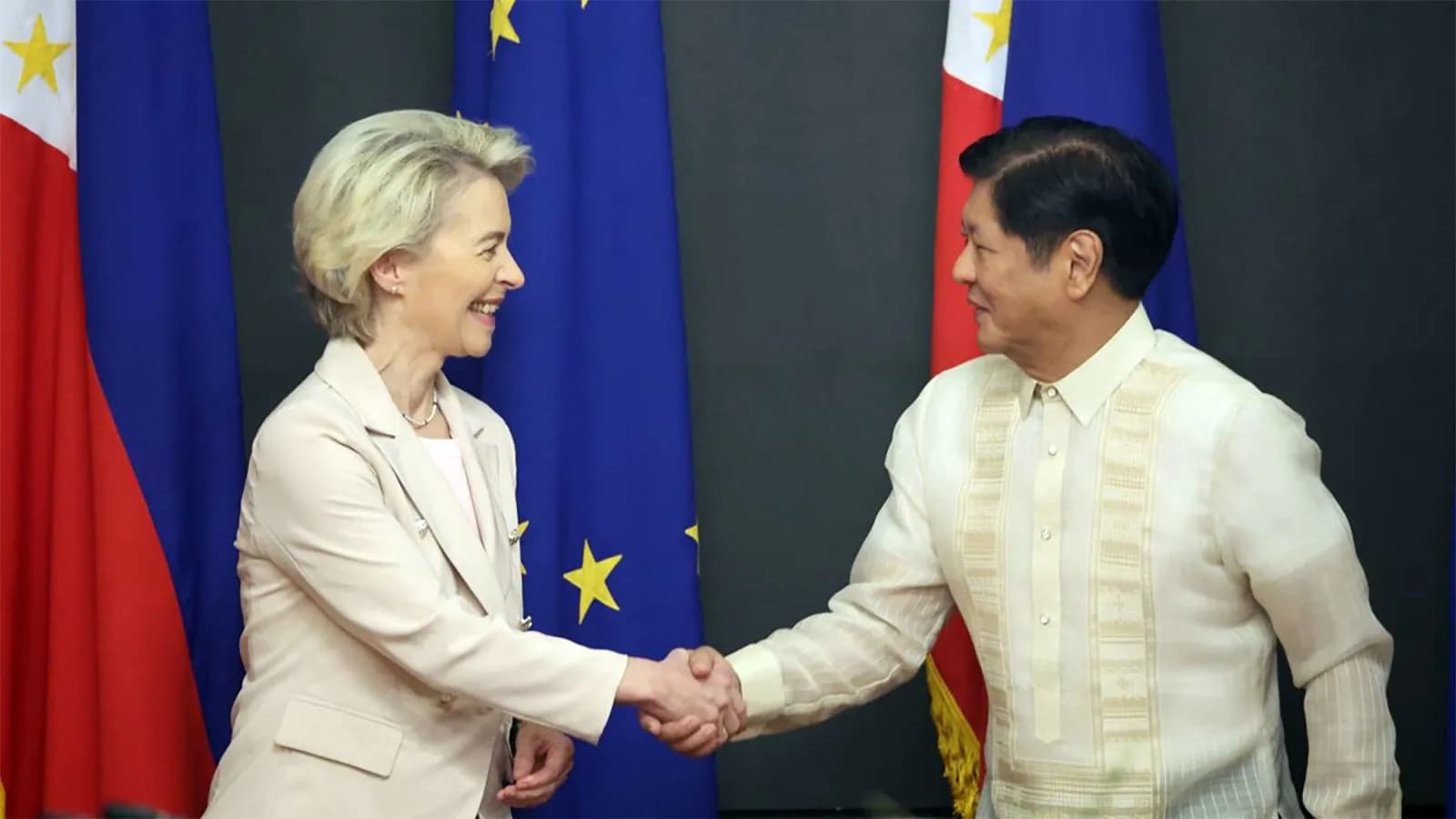
The European Union and the Philippines have reached a substantive agreement in the negotiations for their future free trade agreement (FTA), a political understanding that places both parties in the final phase of the negotiating process. The teams must now complete the outstanding technical aspects before proceeding to the definitive conclusion of the treaty in the coming months.
The agreement was announced this Tuesday by the European Commissioner for Trade and Economic Security, Maroš Šefčovič, and the Philippine Secretary of Trade and Industry, Maria Cristina Aldeguer-Roque, after holding a video conference focused on the latest issues of the negotiation.
The understanding does not yet signify the entry into force of the treaty. The European Commission has clarified that both parties must finalize negotiations based on the political agreement reached, including determining its implementation and defining the pending technical details. Necessary procedures for its approval must then be completed.
The future agreement will affect trade relations that currently total nearly 28 billion euros annually between goods and services. The bilateral exchange of goods reached 17.6 billion euros in 2025, while service trade stood at 10.3 billion during 2024.
In 2025, the EU was the fourth largest trading partner of the Philippines, accounting for 8.3% of the total goods trade of the Asian country. The relationship also has a significant investment dimension. The volume of EU foreign direct investment in the Philippines amounts to 15.4 billion euros, compared to 2.4 billion corresponding to Philippine investments in EU territory.
One of the main elements of the future treaty will be the reduction of tariff barriers. The agreement includes the liberalization of more than 94% of tariff lines, which represent more than 97% of bilateral trade. The Philippines, with a population exceeding 110 million inhabitants, constitutes a market of special interest for various European exporting sectors.
Among the main industrial sales of the EU to the Philippine market are machinery and appliances, transport equipment, pharmaceuticals, and medical devices. In the agro-food sector, meat products, especially pork and poultry, as well as dairy products and spirits have weight.
The agreement will also establish rules for access to Philippine public procurement. According to the European Commission, the country's public procurement market will open for the first time to foreign bidders under the conditions outlined in the treaty.
Another chapter addresses the protection of intellectual property rights and includes a list of European geographical indications. Additionally, provisions aimed at digital trade will be included, with rules relating to commercial exchanges via electronic means, data privacy, and consumer protection.
Sanitary and phytosanitary measures and technical barriers to trade are also part of the negotiated text. The goal is to establish transparent procedures for businesses from both parties and reduce certain costs associated with commercial operations while maintaining respective regulatory requirements.
The treaty also incorporates commitments related to trade and sustainable development. Respect for human rights and the Paris Agreement is included among the essential elements of the trade relationship, along with specific provisions on sustainability.
Energy and raw materials constitute another area included in the negotiation. The future framework will establish rules for investments related to these sectors, including those aimed at renewable energy projects. These subjects are particularly relevant within European trade policy due to their relation to supplier diversification and international supply chains.
The agreement fits into the EU's strategy to expand its trade relationships in the Indo-Pacific region and diversify markets and suppliers. Brussels is maintaining trade negotiations with other Southeast Asian countries and considers the Association of Southeast Asian Nations (ASEAN) one of the areas of interest in its trade policy.
The discussions between Brussels and Manila have more than a decade of background. The EU and the Philippines first started negotiations for a free trade agreement in 2015, although they were later interrupted. The process was formally resumed in March 2024 with the intention of establishing an updated trade framework that would incorporate not only market access but also issues related to sustainability, investment, public procurement, and digital trade.
Following the political understanding announced this Tuesday, the negotiating teams will work on resolving outstanding technical issues and the final configuration of the agreement. Once the text is finalized, it must follow the corresponding institutional procedures before it can enter into force.