
The funding of the energy transition of European ports is part of the negotiation for the next Connecting Europe Facility (CEF) for the period 2028-2034, at a time when port facilities face investments in the electrification of docks, connections to electrical grids, and new infrastructure for alternative fuels.
The proposal presented by the European Commission contemplates an allocation of 81.428 billion euros for the future Connecting Europe Facility, of which 51.500 billion would correspond to transport. The figures are still part of the negotiation for the upcoming multiannual financial framework and, therefore, do not constitute a definitive allocation.
The European Union's Port Strategy, approved by the Commission on March 4, includes among its lines of action the energy transition of these infrastructures and contemplates measures aimed at facilitating their electrification, improving connections with electrical grids, and promoting access to funding. The Commission itself indicates that the CEF 2028-2034 will be one of the available instruments to finance port investments and that OPS projects will be among the priorities of the CEF call for 2026.
In this process, MEP Oihane Agirregoitia, co-reporter of the European Parliament for the new Connecting Europe Facility, presented in June a battery of amendments so that the program specifically recognizes the energy needs of the ports. Among the cited investments are the electrification of terminals, the electrical supply to ships during their stay in port, energy storage and distribution systems, and renewable generation within the port premises.
The Port of Algeciras Bay, the first Spanish port by total traffic, faces this regulatory and financial scenario with its own electrification program for its docks. The Decarbonization Plan of the Port Authority of the Bay of Algeciras includes a total investment of 90 million euros to develop OPS systems in Algeciras and Tarifa. The planned funding combines resources from the APBA with NextGenerationEU funds, the Sustainable and Digital Transport Support Program, and European funds from the Connecting Europe Facility.
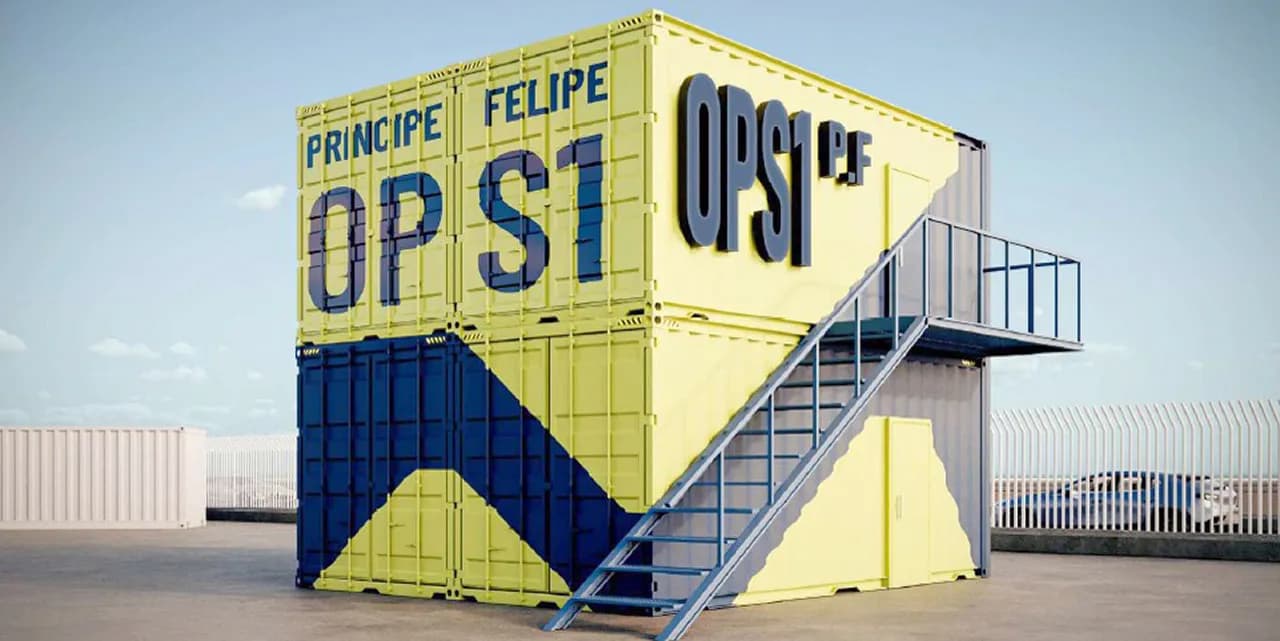
The program includes 2.8 million euros for supply points in Isla Verde Interior and 5.95 million for the Prince Felipe Dock and the initial section of the North Dike. These actions are complemented by 11.5 million allocated to the docks used for traffic with Ceuta and Tangier and 67 million for container terminals and other docks of the port area.
This last project includes the terminals Juan Carlos I, where APM Terminals Algeciras operates, and Isla Verde Exterior, where TTI Algeciras is located, in addition to the Exempt Dike and the rest of the North Dike. The APBA's planning establishes a supply capacity for these facilities of up to 29 MVA at medium voltage.
The roadmap published by the Port Authority plans to gradually extend OPS until reaching the different terminals by 2030. For the container terminals of Juan Carlos I and Isla Verde Exterior, along with the Exempt Dike and the rest of the North Dike, the Decarbonization Plan's schedule places electrification on the horizon of the fourth quarter of 2027.
The energy transition of Algeciras is not limited to the electrical supply to ships. The same plan includes a strategy to expand the availability of alternative fuels. Biofuels and LNG are already appearing as established options, while methanol and ammonia are in the development phase, and hydrogen is part of the technologies currently under research.
The European Commission estimates that approximately 10 billion euros of community funds have been allocated since 2014 to port projects related to energy, sustainability, connectivity, and innovation. The new community financial framework will determine the volume and conditions of the resources available after 2027 to continue financing this type of infrastructure.
The European schedule also coincides with the obligations established for the implementation of electrical supply to ships in certain ports of the trans-European transport network from the end of this decade, which places investments in networks, substations, and OPS points among the actions that the main European maritime hubs will have to undertake.