
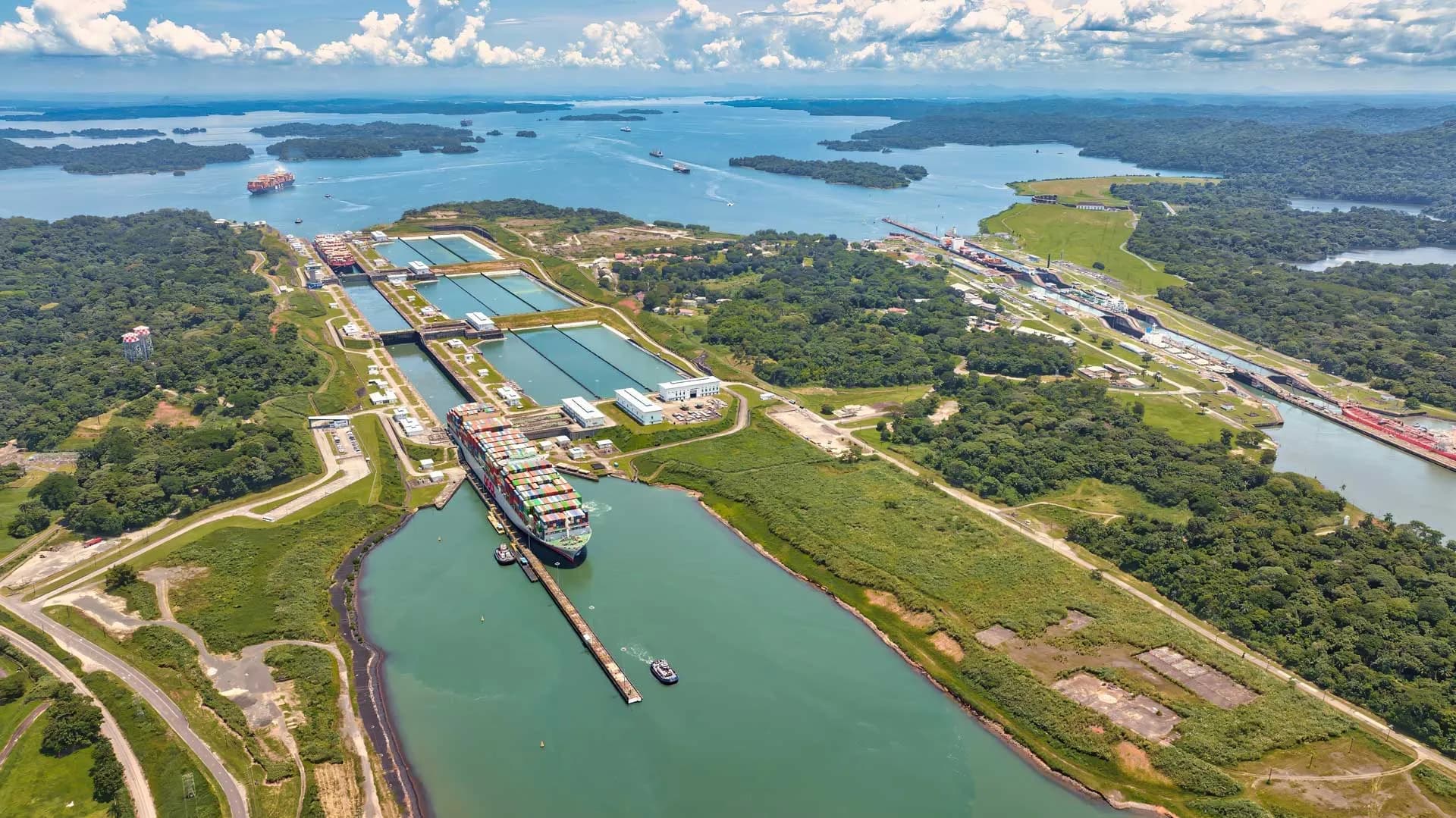
Maritime traffic in the Panama Canal is approaching its maximum capacity as a result of disruptions in energy trade due to the conflict in the Middle East and the drop in transits through the Strait of Hormuz, according to an analysis published by BIMCO.
"So far this year, vessel transits through the Panama Canal have increased by 8% year-on-year to an average daily of 38, driven by the tanker segment. Transits have been especially high during the last five weeks, with a year-on-year increase of 16%, due to the rise in U.S. energy exports to the Pacific," explained Filipe Gouveia, Shipping Analysis Manager at BIMCO.
The war in Iran and the consequent reduction in traffic through the Strait of Hormuz have disrupted exports from the Persian Gulf, straining global energy supply and increasing prices of energy commodities. This situation has contributed to an increase in U.S. energy exports to Asia and the West Coast of the Americas, leading to increased demand for transit slots in the Panama Canal.
"The Panama Canal's maximum daily capacity is around 36 or 40 transits, so it is currently operating close to its limit. Some transits are reserved in advance, while others are offered as last-minute slots and auctioned daily. The recent surge in demand has inflated auction prices and caused a year-on-year increase of 50% in waiting times, which now average 47 hours," Gouveia added.
According to data handled by BIMCO, a wide variety of vessels transit the Panama Canal, although the container ships, LPG gas carriers, tankers, and bulk carriers together account for 77% of the transits. Sectors like container transport usually operate on fixed schedules, allowing operators to secure transit slots in advance compared to other types of vessels. The rest of the segments, including bulk carriers and tankers, tend to bid for slots closer to the transit date.
Gouveia also pointed out that "when the cost and time associated with transit through the Panama Canal increase, operators may consider alternative routes via the Cape of Good Hope or Cape Horn. These alternatives involve longer trips and, therefore, higher bunkering costs, although they can also reduce transit tolls and offer greater operational flexibility."
Looking ahead, BIMCO predicts that the demand for transits through the Panama Canal could remain high while disruptions in the Strait of Hormuz persist and U.S. energy exports remain elevated. In the short term, congestion and waiting times are expected to continue to be high, with the possibility of increasing in the medium term. The Panama Canal Authority has scheduled maintenance work on the east lane of the Panamax locks between June 9 and 17, which will reduce the available transit slots by ten during that period.
"The climate phenomenon of El Niño is expected to manifest between May and July, posing an additional risk for transits through the Panama Canal. During El Niño episodes, Panama usually records a reduction in rainfall, which can affect the level of Gatun Lake, the canal's main reservoir. When El Niño manifested last in 2023, normal transit conditions were altered for approximately a year. At the height of the disruption, between December 2023 and January 2024, only 22 daily transits were allowed with a maximum draft of 13.4 meters (44 feet), 12% below normal levels," concluded Gouveia.