
Maritime consultant Alphaliner has noted in its latest quarterly report on operational margins that Asian shipping companies generally record better results than their European counterparts. According to the analysis, one of the reasons for this difference lies in the different fleet deployment priorities between the two blocks of operators.
According to Alphaliner, operators based in Europe allocate a larger share of their tonnage to services with origin and destination in Europe, where exports have shown weak performance in recent months. Asian shipping companies, on their part, concentrate their capacity more on exports from the Far East, which maintain a more solid performance.
When analyzing the global fleet of regular lines, the Far East-Europe route accounts for a quarter of all deployed capacity, making it the largest traffic by volume globally. It is followed by traffic between Asia and North America, with 16% of the global fleet, while services to and from Latin America occupy third place, with 14%.
The comparison of the commercial profiles of the ten largest shipping companies in the world confirms these priority differences in fleet deployment. MSC allocates 28% of its capacity to the Far East-Europe route, 17% to Latin America, and 14% to Africa. Maersk presents a similar distribution, with 28% in the Far East-Europe route, 18% in Latin America, and 13% in Africa.
CMA CGM concentrates 23% of its fleet on the Far East-Europe route, 18% in Latin America, and 15% in traffic between Asia and North America. The COSCO group deploys 29% of its capacity on the Far East-Europe route, 23% in Asia-North America, and 14% in intra-Asian traffic. Hapag-Lloyd, for its part, allocates 27% of its fleet to the Far East-Europe route, 21% in Asia-North America, and 20% to Latin America.

Among the relatively smaller Asian operators, ONE dedicates 32% of its capacity to Asia-North America traffic, 28% to the Far East-Europe route, and 15% to Latin America. Evergreen deploys 36% of its fleet on the Far East-Europe route, 31% in Asia-North America, and 11% in intra-Asian traffic. HMM concentrates more than half of its capacity, 53%, on the Far East-Europe route, with an additional 23% in Asia-North America and 11% in Latin America.
Yang Ming allocates 48% of its fleet to the Far East-Europe route, 34% to Asia-North America, and 9% to intra-Asian traffic. ZIM, lastly, presents the profile most focused on the Pacific among the ten analyzed shipping companies, with 52% of its capacity in Asia-North America traffic, 15% in the Far East-Europe route, and 10% in Latin America.
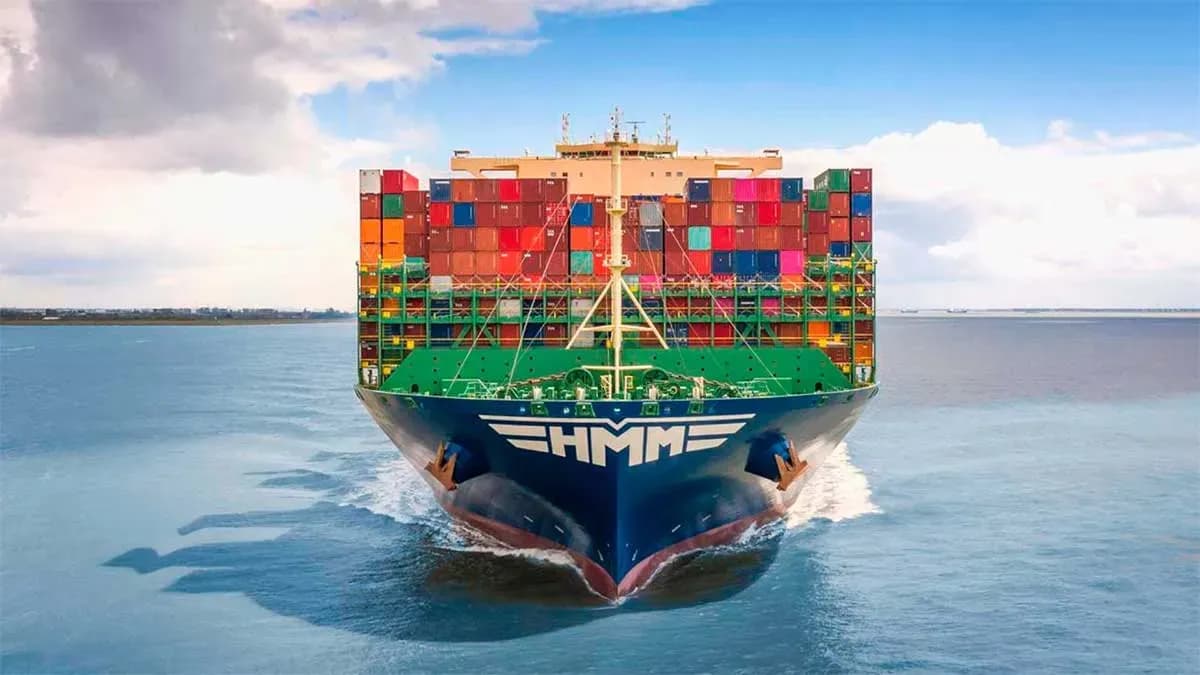
According to Alphaliner, Hapag-Lloyd and HMM are the only two shipping companies in the top-10 that share the same profile of main traffic, although with different percentages between them. HMM offers more than half of its entire capacity, 53%, on the Far East-Europe route.
ONE and ZIM are, according to the report, the only two shipping companies in the top-10 that have Trans-Pacific traffic as their main route in terms of fleet deployment. In the case of ZIM, this percentage exceeds half of its entire capacity, at 52%.
For the remaining eight shipping companies in the top-10, the Far East-Europe route constitutes the most significant traffic in their fleet deployment. Alphaliner notes that this proportion is higher than recorded in a similar comparison made three years earlier, when only six shipping companies had the Far East-Europe traffic as their main route. The current figure, with eight of the ten largest operators concentrated on this route, points to greater homogeneity in fleet deployment priorities compared to the snapshot taken in 2023.
Hapag-Lloyd's own case exemplifies this change in composition: in May 2023, Latin America was the most important traffic for the German shipping company, with 24% of its fleet deployed in those services, while in the latest Alphaliner comparison its main traffic has shifted to Far East-Europe, with 27% of capacity, leaving Latin America in second place with 20%.
Alphaliner's data reflects a fleet deployment map in which the Far East-Europe route gains relative weight among most of the ten largest shipping companies in the world, while a small number of operators, mainly Asian, maintain a more marked orientation towards trans-Pacific traffic. This unequal distribution of trade routes, along with the divergent performance of exports between Europe and Asia, helps to explain the profitability differences that Alphaliner's quarterly report attributes to European and Asian shipping companies.