
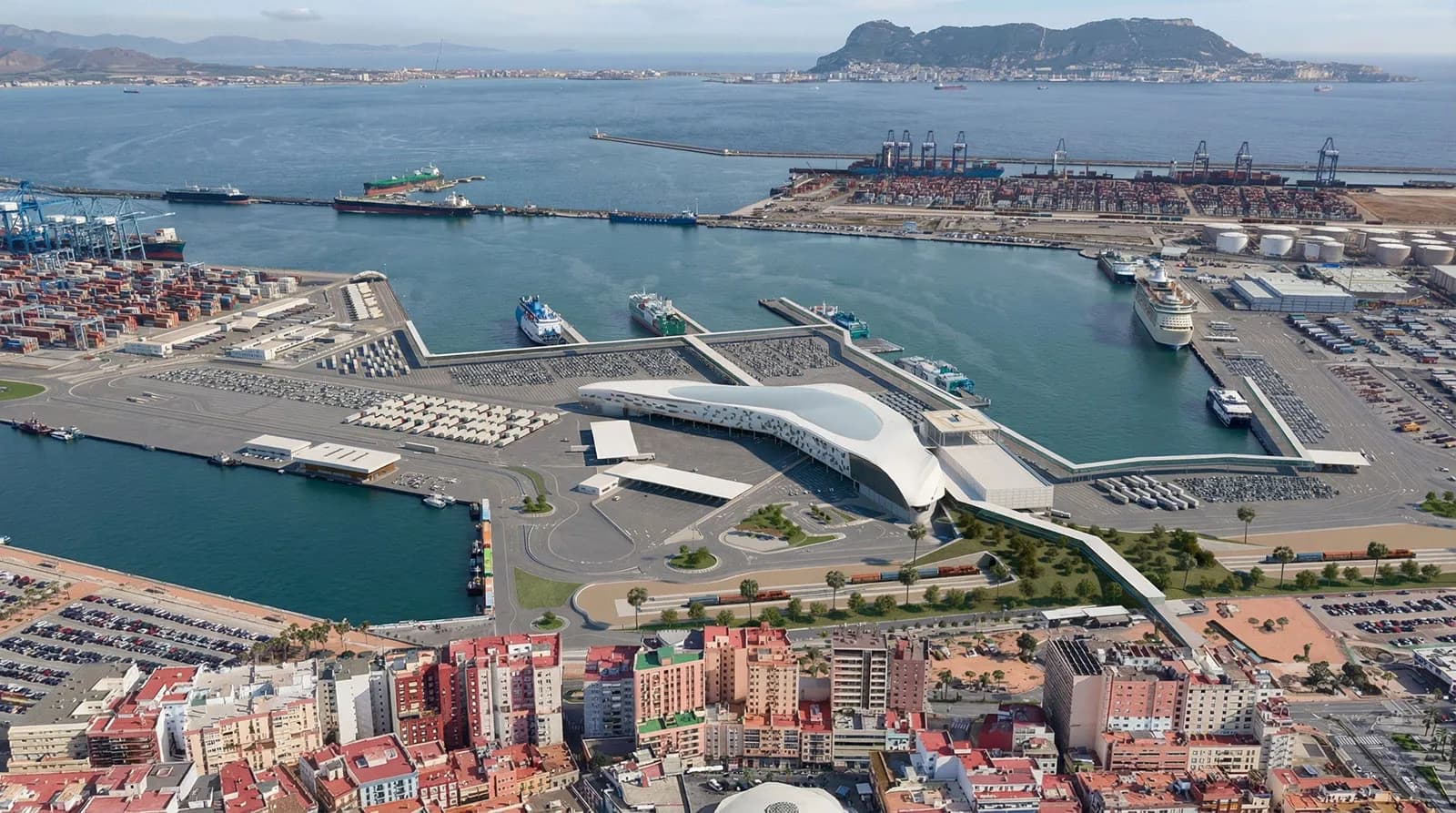
The Strategic Plan 2030 with a 2040 vision of the Port Authority of the Bay of Algeciras (APBA) includes the construction of a new Maritime Station in Algeciras designed with integration criteria with the urban front of the city. The project is among the milestones that the document groups under the so-called Hercules Plan for traffic in the Strait and accompanies the comprehensive transformation of the La Galera dock, where passenger activity is concentrated today.
The integration with the city is one of the keys to the design. The plan incorporates the elevations of the pedestrian bridge connecting with the urban front and interior views of the building, which outlines a terminal thought of as operational equipment and as a contact point between the port and the center of Algeciras. The expansion of the T2 railway terminal, in the same area, will also be carried out considering this urban integration, as stated in the document.
In terms of capacity, the action accompanies the transition from eight to ten ROPAX berths in the Port of Algeciras and aims to serve 7.5 million passengers. The La Galera dock, the epicenter of maritime passage in the Strait, is the area where these increases are concentrated, along with the 15 additional hectares that the plan reserves within the port for traffic in the Strait and the 30 hectares planned in external areas.
The Maritime Station is part of the package that the APBA has called the Hercules Plan, a set of actions specifically aimed at traffic in the Strait. This package includes the expansion of the Border Control Post, with its service entry set for 2028; the goal of 800,000 trucks per year by 2030 — one million by 2035 — and a new governance model for road traffic between Algeciras and Tangier Med. The APBA also proposes to optimize the connection with Ceuta along the same axis.
The new governance model is another of the elements accompanying the architectural project. The plan does not detail its specific articulation, but mentions it as a differentiated action within the line of efficient and competitive growth, along with improving the agility of border control and inspections and implementing a systematic of continuous improvement in operations. The explicit aspiration is to create a "port without waiting or idle time," under the concept of Just-in-time Port.
In the decarbonization block, the new terminal connects with the entry into service, scheduled for 2027, of the first 100% electric fast ferry service between Tarifa and Tangier Ville, which the APBA calls the first green line Europe-Africa. Although this service operates from the Port of Tarifa and not from Algeciras, it is part of the same strategic objective of comprehensive fleet renewal serving the Strait, with specific actions also for the Algeciras-Tangier Med line.
The Strategic Plan includes 15 additional hectares within the Port of Algeciras for traffic in the Strait and another 30 hectares in external areas. These surfaces would allow part of the waits and auxiliary operations to be moved away from the areas closest to the docks, where the availability of land is one of the main constraints.
The new terminal is also coordinated with the expansion of the Border Control Post, whose completion is set for 2028. The action aims to increase the capacity for inspecting goods and respond to the growth of truck traffic, which the APBA places at 800,000 units by 2030 and one million by 2035.
The expansion of the ro-pax berths is part of the same scheme. The transition from eight to ten berthing positions would increase capacity to receive ferries and organize calls, especially during peak demand times. The station must adapt to this configuration and channel passengers from the different docks.
The project thus combines three dimensions: the modernization of passenger service, the operational reorganization of La Galera, and the physical connection with the city. The Maritime Station appears in the Strategic Plan as one of the elements that must transform the maritime entry and exit of Algeciras, within a planning that encompasses berths, border controls, accesses, external surfaces, and management of traffic in the Strait.