
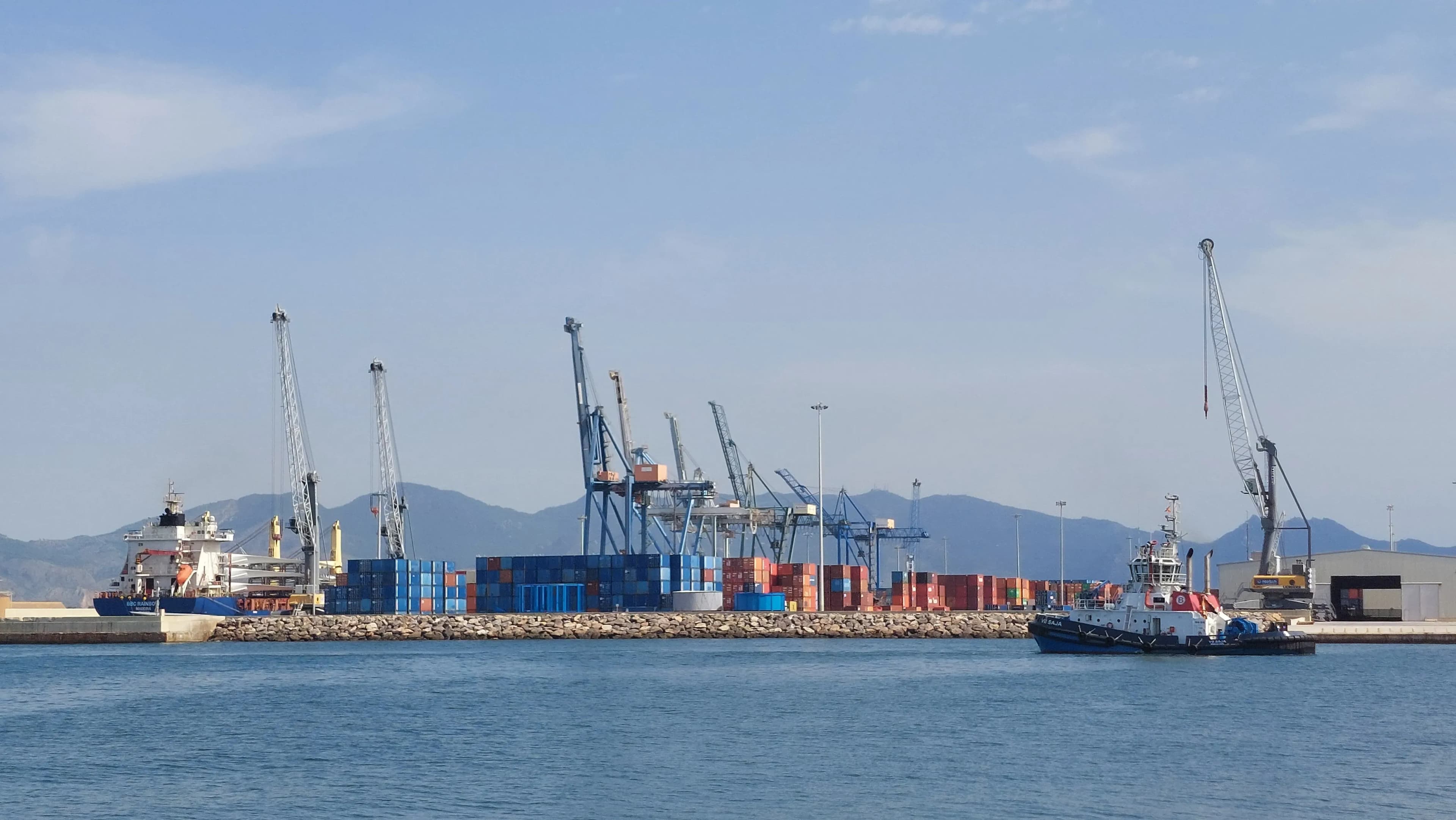
The state-owned port system has moved a total of 133.2 million tons of goods during the first quarter of 2026, representing a decrease of 1.3% compared to the same period of the previous year, in a context marked by economic uncertainty and international geopolitical tension.
The start of the fiscal year was conditioned by adverse factors such as weather and temporary terminal closures, which caused declines of 4.5% in January and 1.3% until February. However, March has shown signs of recovery with better results in most categories, although insufficient to reverse the negative balance of the quarter.
General cargo, exceeding 66.4 million tons, moderates its decline to 2%, compared to the sharper declines recorded at the beginning of the year. Within this segment, containerized cargo falls by 1.5%, while conventional cargo drops by 3%.
In contrast, container traffic has experienced positive evolution, with a growth of 3.6% reaching nearly 4.5 million TEUs, driven mainly by the increase in transit, which rises by 6.2%.
Liquid bulk also stands out, registering an increase of 3.2% until reaching 44.5 million tons, thanks to the boost from products such as gasoline, fuel oil, and natural gas. In contrast, solid bulk maintains a negative trend, with a decline of 8.8% and a total volume of 18.5 million tons.
Ro-ro traffic reduces its decline to 3% in the accumulated quarter, reaching 17.8 million tons, supported by the good figures from March.
Regarding maritime activity, the number of merchant vessels that docked at Spanish ports decreased by 6.2%, totaling 33,802 units, while gross tonnage dropped by 0.9%.
For its part, passenger traffic maintains a positive trend, exceeding 7.1 million movements, representing an increase of 4.1% compared to the same period of the previous year.