
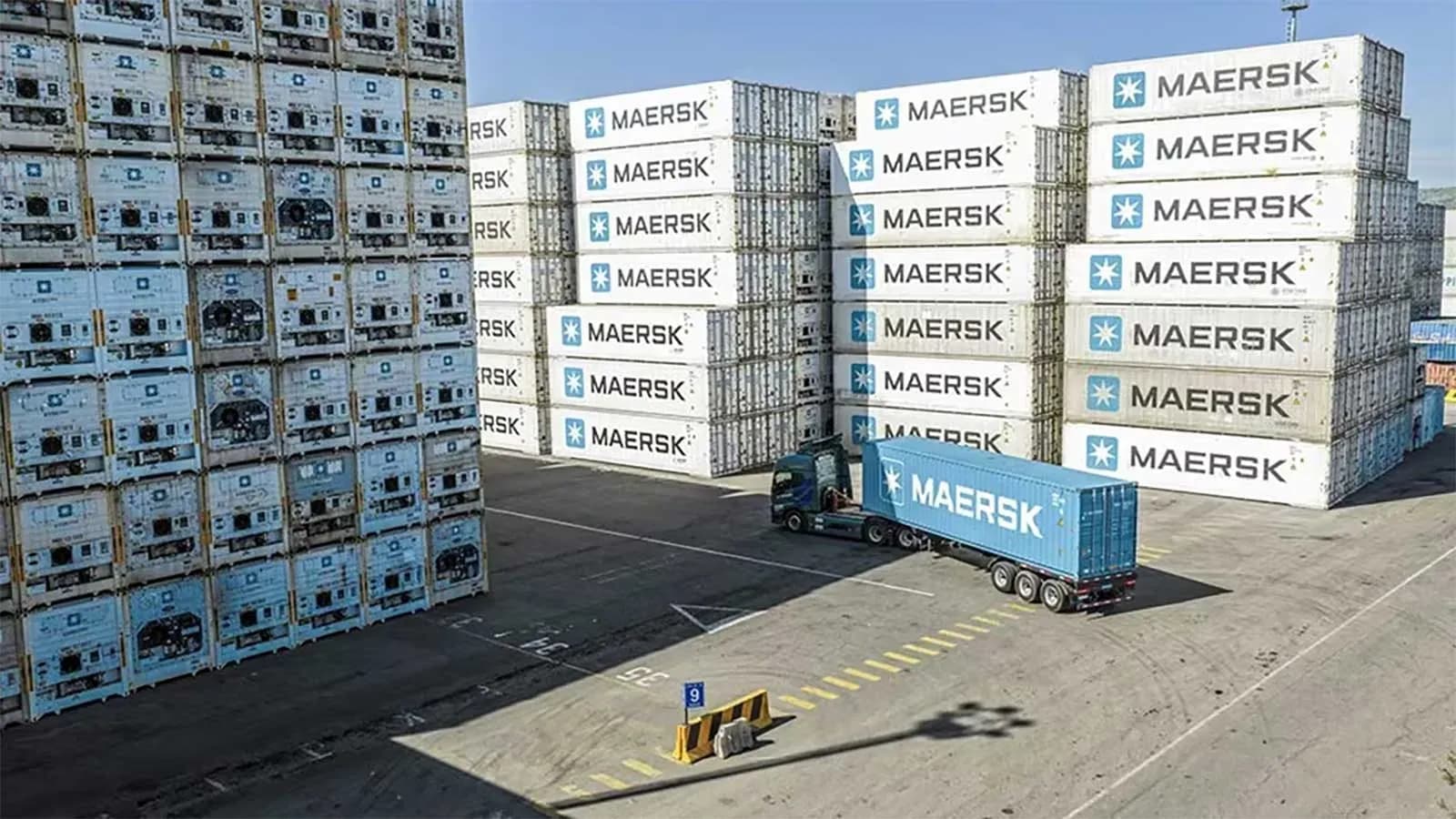
A.P. Moller - Maersk has begun the rollout of a new generation of IoT (Internet of Things) connectivity devices for its fleet of reefer containers, known in the industry as reefers. The goal of the Danish shipping company is to install these devices on all of its units over the next few years. So far, the company has completed installation on approximately 30% of its total fleet.
The project comes after years of coexisting with various generations of different devices aboard Maersk's ships, a situation that, according to the company, made it difficult to provide a homogeneous experience to customers. The renewal precisely aims to standardize the equipment and unify the flow of data received by users of refrigerated transport, from the moment the merchandise is sealed in the container until its delivery at the destination.
"Since real-time access and data availability are increasingly critical for our cold chain customers, the deployment of these next-generation IoT devices will ensure a much more reliable flow of information throughout the container's journey," explained Bruce Marshall, director of Refrigerated Cargo at Maersk.
The upgrade of the reefers is supported by prior work of the shipping company: the installation of a new digital connectivity platform aboard 450 ships, whose rollout is already in its final phase. According to Maersk, this infrastructure constitutes the basis on which the new tracking and management capabilities of refrigerated cargo are now being built.
"The new digital platform of our fleet has built a solid foundation for the future. The next step is to replace all current IoT devices in our fleet of reefers with next-generation technology, a task we have already initiated. After years of operating with various generations of devices, this upgrade will allow us to standardize the equipment and provide a much more consistent customer experience," added Marshall.
The transportation of goods under controlled temperature requires constant monitoring of variables such as the interior temperature of the container, humidity, or possible interruptions in the cold chain, as any deviation can compromise the quality of the cargo, especially in perishable products such as fresh food, pharmaceuticals, or biological materials. The IoT devices installed on the reefers allow these data to be transmitted in real-time along the entire route, so that both the shipping company and the customer can monitor the condition of the merchandise without the need for physical inspections.
Since 2019, Maersk has offered its customers access to Captain Peter, a visibility tool that allows tracking the cargo from the sealing of the container to its delivery at the final destination. The renewal of the IoT devices, according to the company, will lay the groundwork for expanding the functionalities of this service in the future.
"For cold transport customers, the certainty that the data is always available is crucial. That experience will significantly improve once our entire fleet of reefers is equipped with the most advanced connectivity devices," stated Marshall. The executive added that the upgrade "will provide the necessary building blocks to introduce new functionalities" in the customer offer.
In this regard, Maersk has set the goal of transforming its current product, focused on cargo visibility, into a tool capable of interpreting the collected data and offering action recommendations to customers. "We want to pivot our current offer so that it stops being a simple visibility product and becomes an intelligent tool that helps customers interpret the data and provides them with action recommendations," concluded Marshall.
The transport of refrigerated cargo represents a relevant segment within Maersk's container business, with clients in sectors such as food, pharmaceuticals, and other industries that rely on temperature-controlled logistics chains. The replacement of IoT devices is part of a broader digitalization process that the shipping company has been developing in recent years over its fleet, with the declared aim of improving traceability and data reliability throughout the supply chain. Maersk has not specified a specific timeline to complete the installation on the remaining 70% of the reefers fleet.