
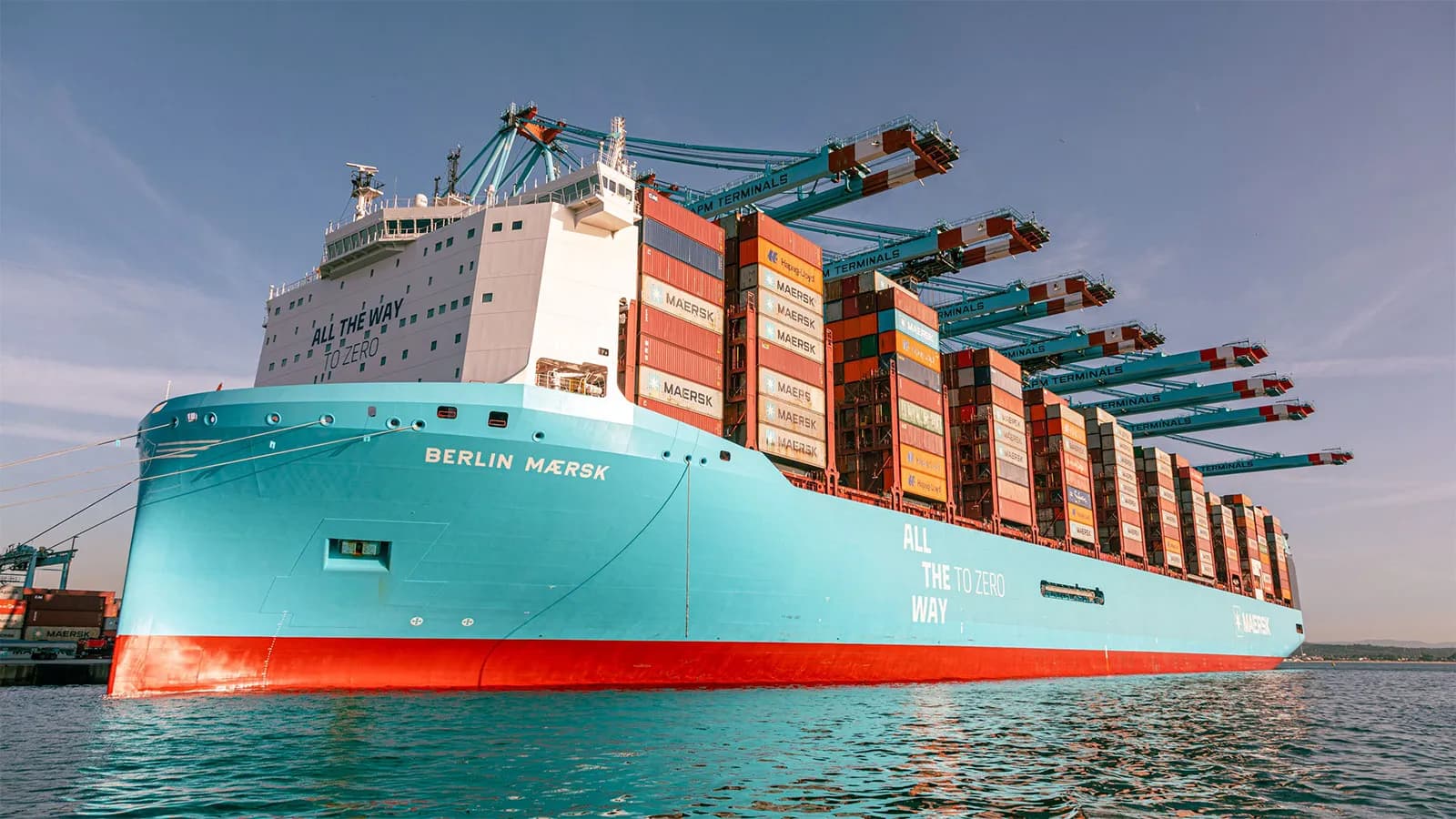
The energy transition of maritime transport is shaping around different fuel alternatives and technologies, with no single solution applicable to the entire global fleet at this time. The strategies published by A.P. Moller-Maersk and Mitsui O.S.K. Lines (MOL) reflect this scenario, with programs considering different fuels based on their availability, the characteristics of the vessels, and the evolution of international regulations.
This approach aligns with the conclusions of the fifth edition of the report Climate Action in Shipping: Progress towards Shipping’s 2030 Breakthrough, produced by UCL Energy Institute and Getting to Zero Coalition and presented this week during Climate Week in New York. The study assesses the progress toward the goal that between 5% and 10% of the fuel used by international maritime transport in 2030 comes from scalable zero-emission sources.
Maersk currently maintains an approach based on a portfolio of different fuels. In 2025, it incorporated ten new container ships powered by dual methanol propulsion, signed a supply agreement for liquefied biomethane —bio-LNG— and conducted tests with e-methanol blends. The company believes that diversifying propulsion options will allow it to gradually adapt its fleet to the availability of fuels with lower emissions.
This strategy had already been reflected in the fleet renewal program announced by the shipping company, which includes dual systems of methanol and liquefied gas. Maersk then indicated that it anticipates a future with different fuels and that the choice of technologies will depend, among other factors, on the regulatory framework and the availability of fuels with lower emissions. The company also maintains a favorable position towards a technologically neutral international regulatory framework that encourages the development of scalable zero-emission fuels.
MOL follows a similarly diversified strategy. The update of its Environmental Vision – BLUE ACTION 2035 Phase 2, published in April 2026, considers the use of LNG and biodiesel in the short and medium term, and a subsequent transition towards bio-LNG, e-LNG, and other alternatives. According to the company's documentation, in March of this year, it had 112 vessels capable of using LNG, including 87 methanol carriers and 25 units from other segments.
The Japanese shipping company is also developing projects related to methanol and ammonia. In February, it participated in the first ship-to-ship methanol supply operation carried out at anchor in Yokohama, and in June, signed long-term charter contracts with JERA for two large vessels intended for low-carbon ammonia transport. MOL states in its corporate documentation that it will continue to work with a combination of biofuels, methanol, ammonia, and hydrogen, in addition to expanding the use of bio-LNG.
The report presented in New York situates these business decisions within a scenario where technology and supply are showing progress, although other indicators evolve more slowly. The number of ports offering methanol supply increased from 19 to 29 during the last year, while the operational tonnage ready to use methanol grew from 2.3 to 7.7 million GT. The proportion of the active fleet compatible with scalable zero-emission fuels rose from 0.41% to 0.77%.
The evolution of the order book, however, presents a different trend. Vessels prepared to use this type of fuel reduced their weight from 9.5% to 5.7% of the contracted tonnage, while the report estimates a potential demand for scalable zero-emission fuels of about 0.45 exajoules in 2030, compared to the 0.6 EJ associated with the minimum threshold of 5%.
The study also identifies a reduction in signals from cargo owners. The declared willingness to pay a premium for maritime services with lower emissions fell from 4.5% to 3%, while the proportion of shippers expecting to bear a higher cost over the next five years dropped from 65% to 45%.
UCL Energy Institute and Getting to Zero Coalition classify the areas of technology and supply and civil society participation as partially on track, while they consider that demand, financing, and regulation are outside the expected trajectory. The report links part of this situation to the uncertainty generated after the adoption of the International Maritime Organization's Net-Zero Framework was postponed to October 2025.