
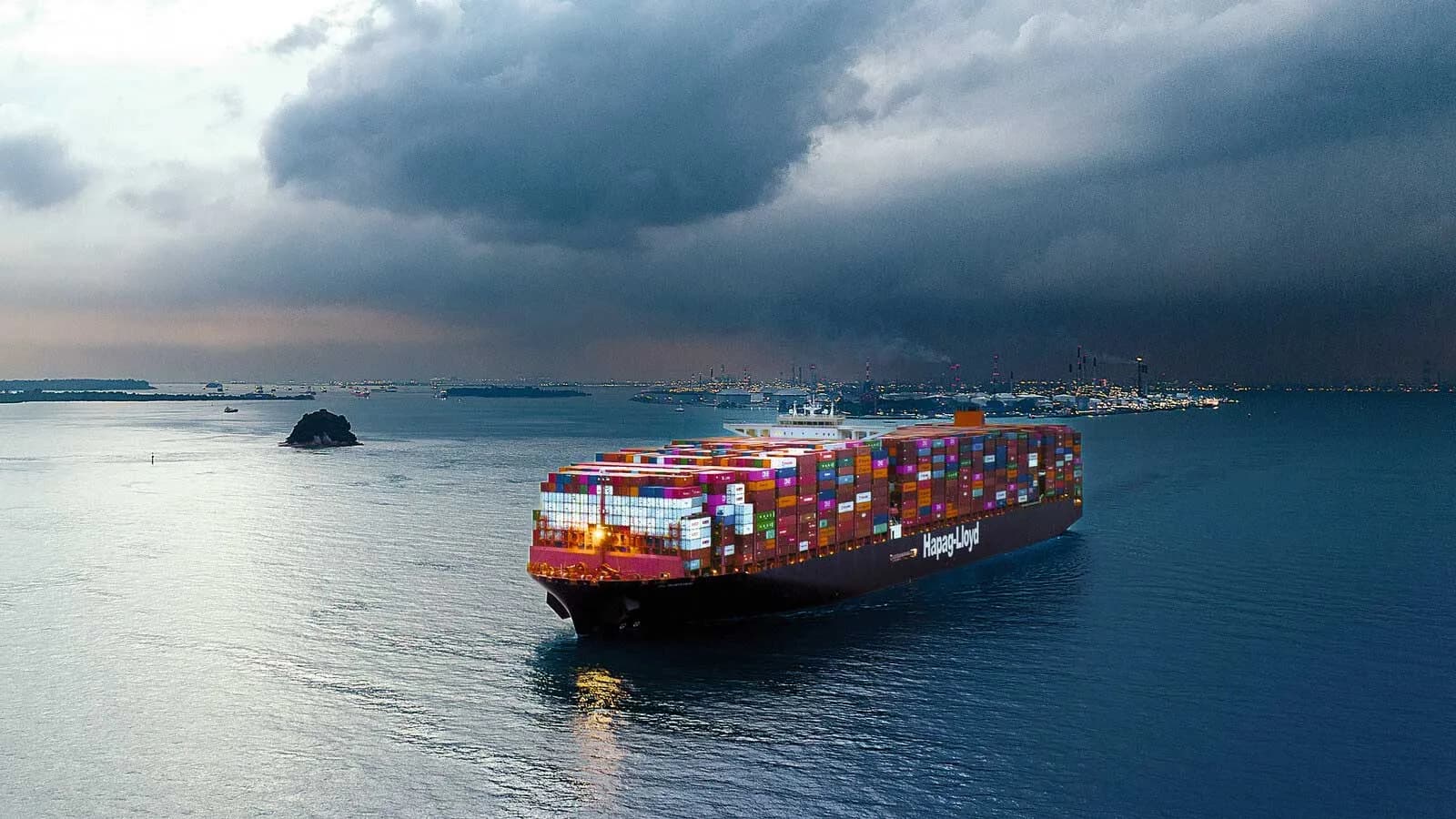
Hapag-Lloyd, the fifth-largest container shipping line in the world by capacity, has signed an agreement with the Port Authority of Hamburg (HPA) for the use of electrical supply in the port (Onshore Power Supply, OPS) at the Port of Hamburg. Through the agreement, the shipping company confirms that it will utilize the available infrastructure whenever possible and will continue to integrate the OPS system into the operational management of its vessels. The agreement applies to electrical supply at all terminals in the port.
The Port of Hamburg is the largest port in Germany and one of the main container ports in Europe, with several terminals operated by different port groups along the Elbe River.
In recent weeks, the vessels "Al Muraykh" and "Tihama" have already used the electrical supply in the port during their calls in Hamburg. Both vessels operate on the Asia-North Europe NE2 service.
The CEO of Hapag-Lloyd, Rolf Habben Jansen, stated that "the electrical supply in port is an important element in our journey towards operating vessels with lower emissions and towards our goal of achieving a fleet with net zero emissions by 2045." Habben Jansen noted that all new construction vessels of the company are already prepared to connect to the electrical grid in the port, and that the shipping company is adapting the current fleet vessels that are suitable for this. "We use the electrical supply in port whenever the infrastructure is available and its use makes operational sense. Hamburg demonstrates how investments in lower emission vessel operations can be put into practice," he added.
The electrical supply in port allows equipped vessels to cover their electricity demand while docked, connecting to the onshore electrical grid instead of relying on their auxiliary engines. By shutting down these engines during the port call, the technology can help reduce both emissions and noise in the port environment. Currently, around 35% of Hapag-Lloyd's fleet is fully equipped for its use.
The electrical supply in port, also known as cold ironing, is one of the key technologies considered to reduce emissions from vessels during their stay in port, as it replaces onboard electricity generation through auxiliary engines with electricity from the onshore grid. European regulations on alternative fuels infrastructure (AFIR) require the main ports of the trans-European transport network to have this infrastructure for container and passenger vessels by 2030, a deadline by which an increasing number of European ports are developing their electrical connection facilities.
Hapag-Lloyd's goal of achieving a fleet with net zero emissions by 2045 is part of the broader framework of the International Maritime Organization (IMO) strategy, which aims to achieve net zero emissions in international maritime transport by around 2050. The company places the use of electrical supply in port among the operational measures aimed at this goal, along with the gradual incorporation of this capacity in its new construction vessels and in the existing fleet.