
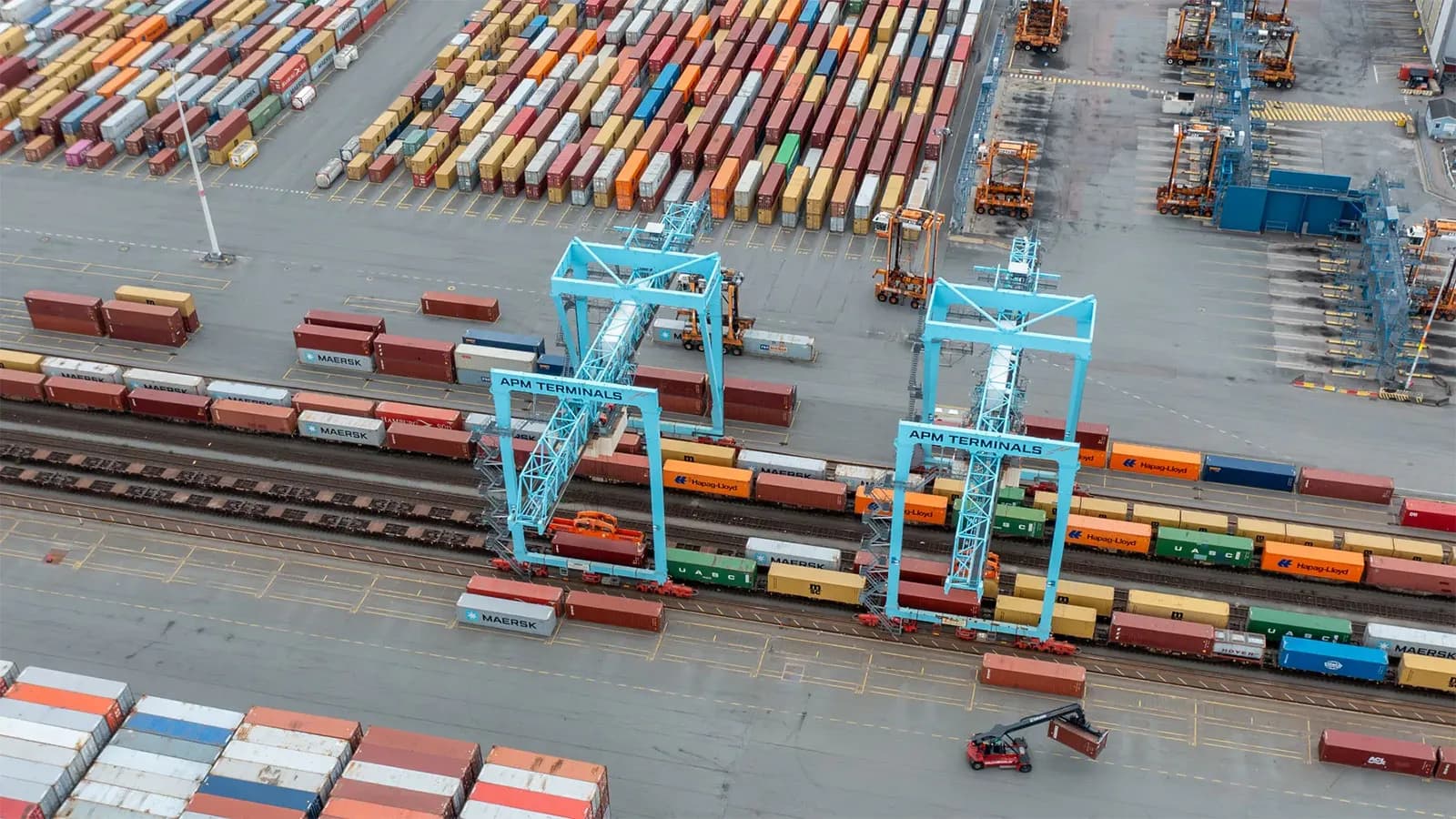
The Swedish wood producer Fiskarheden has launched a new railway service between Malungsfors and the Port of Gothenburg to transport sawn timber intended for export to markets in Asia, the Middle East, and North Africa.
The first train of this new connection departs this Monday from Malungsfors heading to the Gothenburg port area, from where the goods will continue their transport by sea to the different international markets served by the company.
In its initial phase, the service will have one departure every other Monday. Each train will carry 44 containers of 40 feet loaded with sawn timber. The frequency and capacity of the connection may be expanded later based on the evolution of demand.
Fiskarheden has turned to TFK Logistics to develop the railway solution used in this corridor between the interior of Sweden and the main shipping point for the goods.
"We want to transport as much of our inland cargo by rail as possible, so we are very pleased to return to the Port of Gothenburg. TFK Logistics has developed a cost-effective and flexible solution that adapts to us and is also open to other companies in the region," said Fiskarheden's CEO, Joakim Limberg.
The company allocates about 90% of its production to foreign markets. The sawn timber produced by Fiskarheden has different applications, including furniture manufacturing, construction, and concrete formwork.
According to the information provided by the company, buyers of these products are located in different markets in Asia, the Middle East, and North Africa. The new railway link allows for the transfer of containers from Malungsfors to Gothenburg before their shipment for the next phase of the transport chain.
The planned configuration initially establishes a biweekly frequency, with 44 units of 40 feet on each departure. The company keeps open the possibility of increasing the service if the volume of goods using this connection grows.
Fiskarheden is also considering using the return trips of the containers from Gothenburg to Dalarna to transport import goods.
The company is in talks with other companies in the region to analyze the possibility of incorporating loads in both directions and also to take advantage of the return rail route from the port.
"We are talking to companies in the region about shipments in both directions. That would make the service more useful for local businesses," Limberg explained.
The possibility of capturing goods for the journey between Gothenburg and Dalarna is therefore in the conversation stage with potential users in the area. The information provided does not specify at this time which companies could use this service or the products that would be transported inland.
From the Port of Gothenburg, the senior business development manager, Richard Mellgren, has linked Fiskarheden's return to rail transport through the Swedish enclave with the offer from Railport Scandinavia.
"Fiskarheden's decision to return to using rail to reach the Port of Gothenburg is a good example of what Railport Scandinavia can offer. The railway provides exporters from the interior with an efficient way to access international maritime transport," Mellgren pointed out.
The new service thus structures the transportation of Fiskarheden's production in two stages. The first is by rail between Malungsfors and the Port of Gothenburg, while from the port facilities the containers continue by sea to the company's international destinations.
The operation will begin with the scheduled departures every other Monday and the 44 containers of 40 feet established for each train. Fiskarheden plans to adjust this schedule later based on the demand recorded by the service.
The opening of the connection occurs in a context where external activity represents the majority of Fiskarheden's production, with approximately nine out of ten units destined for international buyers.
In the future, this export stream could be supplemented by the transport of import goods in the opposite direction, from Gothenburg to Dalarna, although this possibility depends on the discussions the company is currently having with other companies in the region.